
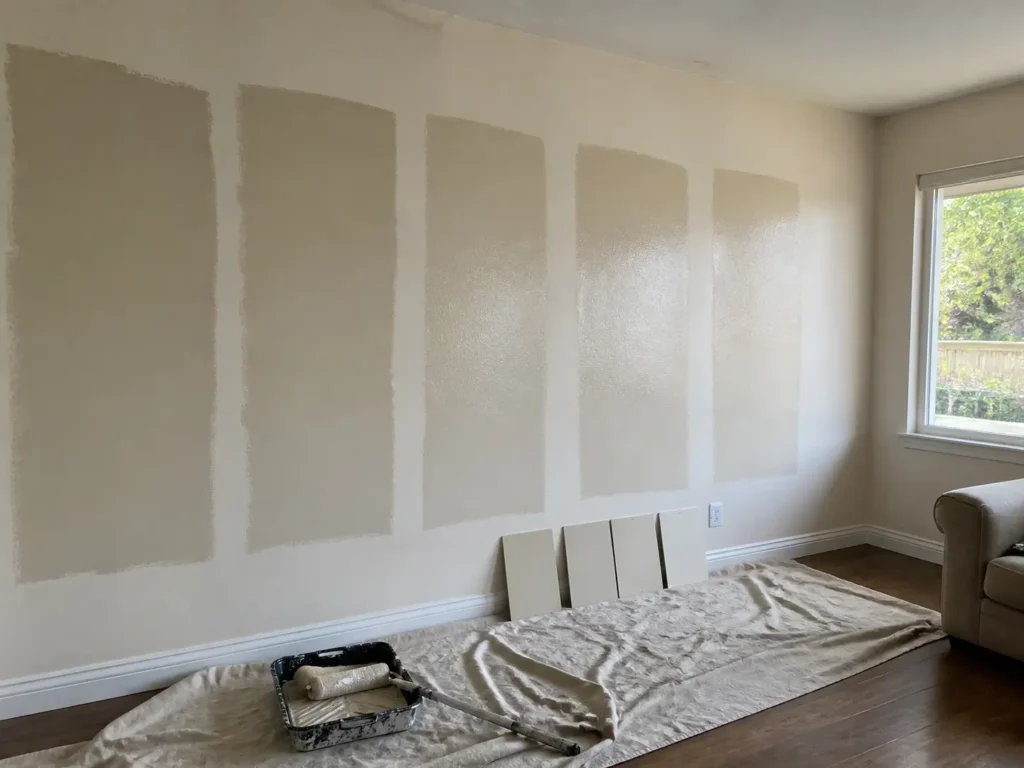
Color gets most of the attention when people plan an interior paint job. Finish usually gets picked at the counter, often with a quick guess between eggshell and satin. That small choice changes how the color looks, how much wall texture you notice, and how easily marks wipe away.
The best paint finish for walls depends on the room. Eggshell is a safe choice for many living spaces, satin handles busy or damp rooms better, and flat or matte can make imperfect walls look smoother. Premium paints complicate the old rules because some low-sheen formulas are now made for regular cleaning.
What does paint finish mean?
Paint finish, also called sheen, describes how much light the dry paint reflects. Flat sits at the low end. High gloss sits at the shiny end, with matte, eggshell, satin, and semi-gloss between them.
As sheen rises, paint generally becomes easier to clean and more resistant to everyday wear. The tradeoff is that reflected light makes dents, patches, roller marks, and uneven drywall easier to see. The Sherwin-Williams paint sheen guide recommends choosing by room use, wall condition, and the amount of cleaning the surface will need.
Product matters too. An older rule might say flat paint is hard to wash, but some newer flat and matte products are made for regular cleaning. Read the label for the exact paint line rather than judging it by the sheen name alone.
Paint sheens at a glance
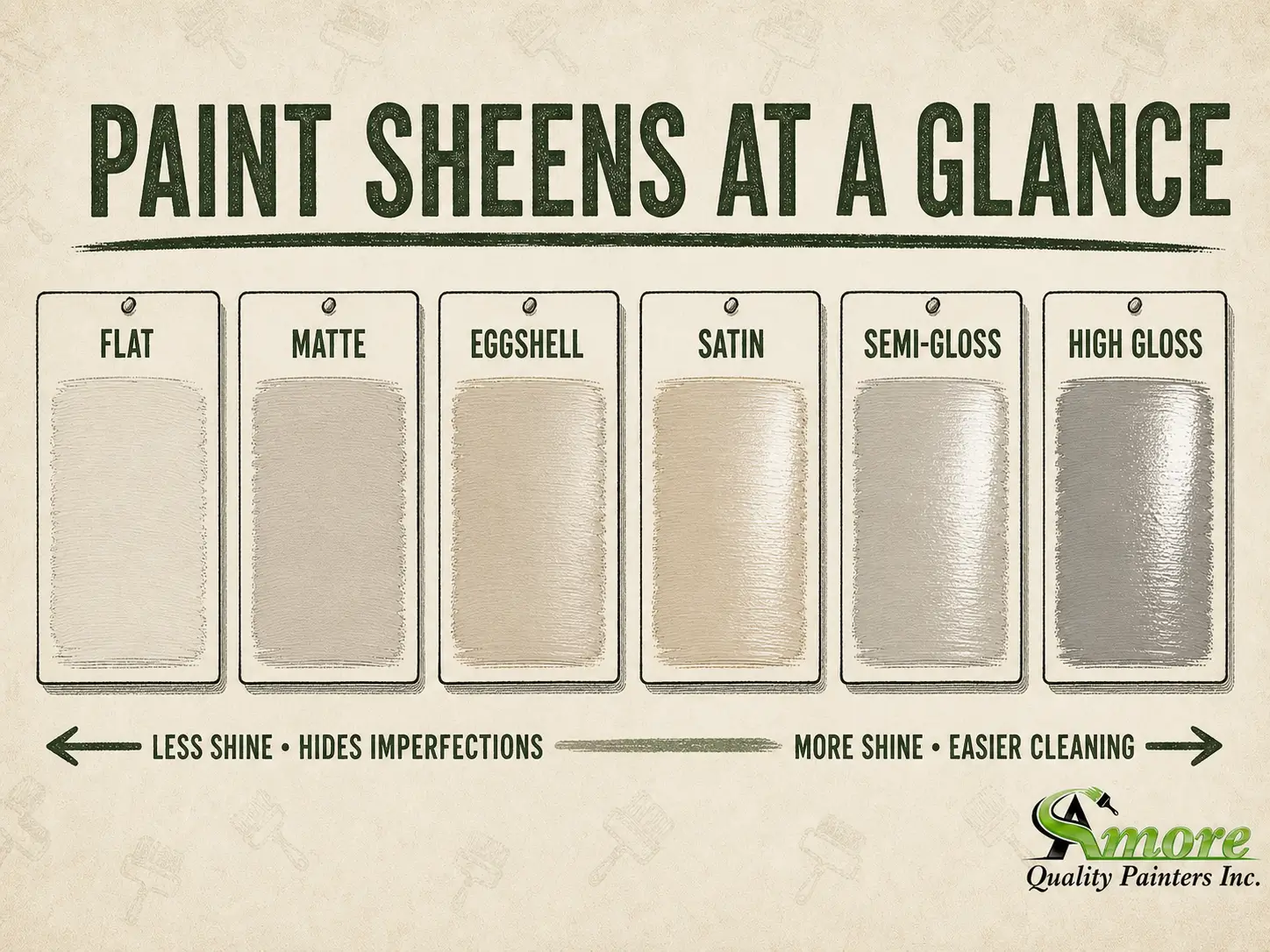
| Finish | How it looks | Where it usually works best | Main drawback |
|---|---|---|---|
| Flat | Almost no reflection | Ceilings, low-traffic bedrooms, textured or patched walls | Marks more easily in basic formulas |
| Matte | Soft, low reflection | Bedrooms, living rooms, dining rooms | Less scrub-friendly than higher sheens in many product lines |
| Eggshell | Subtle glow | Living rooms, dining rooms, offices, adult bedrooms | Can struggle in very wet or heavily used rooms |
| Satin | Noticeable but soft shine | Kitchens, bathrooms, hallways, kids’ rooms | Shows more wall flaws and application marks |
| Semi-gloss | Bright, reflective surface | Trim, doors, cabinets, utility areas | Usually looks too shiny on broad walls and exposes flaws |
| High gloss | Hard, mirror-like shine | Statement doors, detailed trim, furniture | Demands very smooth prep and careful application |
Do not trust the names alone. Sheen labels can shift slightly between brands and product lines, so compare samples from the paint you plan to buy.
Best paint finish for walls in each room
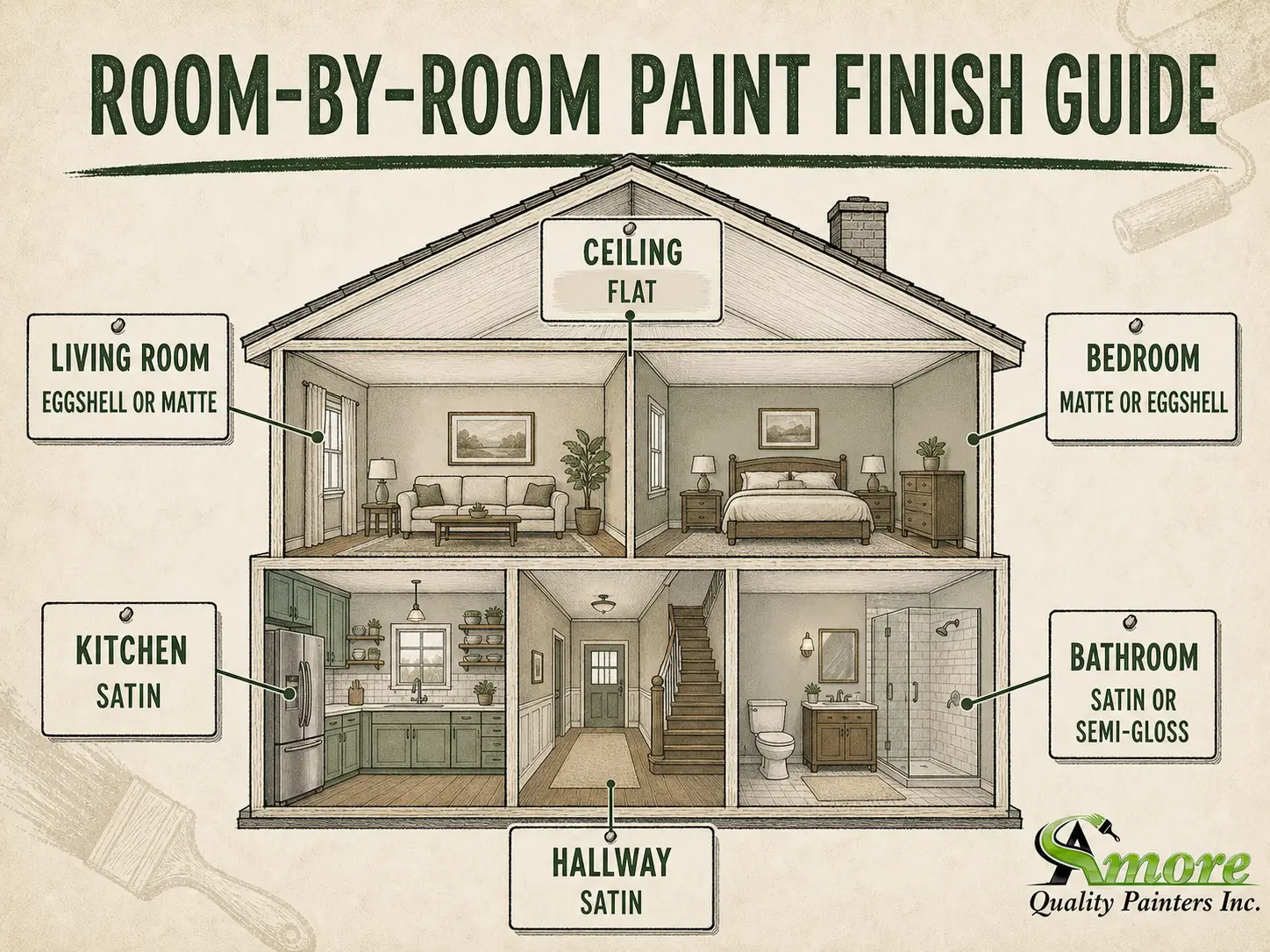
Living room: eggshell or matte
Eggshell works well in most living rooms because it has enough durability for occasional cleaning without turning the walls shiny. It gives color a little depth, yet it does not call attention to every bump in the drywall.
Matte is a good alternative when the room has lots of natural light or older walls with visible patches and texture. The softer reflection keeps those flaws quieter. If the living room doubles as a play area or the family has pets, a washable matte or eggshell is a better bet than a basic flat paint.
Bedroom: matte, eggshell, or washable flat
Adult bedrooms are usually low-traffic spaces, so appearance can lead the decision. Matte and flat finishes create a calm, soft look and help disguise minor surface flaws. Eggshell makes sense if you want easier cleaning or expect the room to change uses later.
For a child’s bedroom, move up to eggshell or satin. Fingerprints, scuffs, and mystery marks happen. A finish that can handle a damp cloth saves frustration.
Kitchen: satin
Kitchen walls deal with splashes, grease, steam, and frequent wiping. Satin is usually the sweet spot. It is easier to clean than eggshell but does not have the sharp glare of semi-gloss across a large wall.
Semi-gloss still makes sense for trim, doors, and some backsplashes. On the main walls, though, it can feel harsh and may exaggerate drywall seams. The Behr interior sheen guide places satin in moderate to high-traffic areas and rooms exposed to moisture, including kitchens and baths.
Bathroom: satin or semi-gloss
Bathrooms need a finish made to tolerate moisture and cleaning. Satin is a comfortable choice for most bathroom walls. It has enough sheen to wipe down easily without making the room feel glossy.
Semi-gloss can be useful in a small bathroom with weak ventilation, around trim, or in spots that get touched and cleaned often. Still, sheen alone cannot solve a moisture problem. Use a paint formulated for bathrooms and run the exhaust fan during and after showers.
Dining room: eggshell or matte
Dining rooms tend to see less abuse than kitchens and hallways. Eggshell gives the walls a slight glow that works nicely in evening light. Matte is better when you want a quieter finish or need to soften an uneven wall.
If the room has wainscoting, try eggshell on the upper walls and satin or semi-gloss on the millwork. The slight sheen change adds definition even when both surfaces use the same color.
Hallway and entry: satin
Hallways collect handprints, bag scuffs, shoe marks, and the occasional scrape from furniture. Satin handles that traffic better than a low-sheen finish and is easier to wipe clean.
Good prep matters here. Hallway lighting often runs along the wall instead of straight toward it, so it can expose ridges, repairs, and rough patches. Sand and prime repairs before painting. A higher sheen over rushed prep will make the problem more obvious.
Laundry room and mudroom: satin
These rooms take more wear than their size suggests. Satin stands up better to damp clothes, baskets, muddy hands, and regular wiping. Semi-gloss is useful on trim, doors, and built-in storage, but satin usually looks better across the walls.
Ceiling: flat
Flat remains the standard ceiling finish because it absorbs light and hides small surface variations. That matters on ceilings, where light from windows and fixtures can make roller lines surprisingly visible.
Bathrooms and kitchens may need a ceiling paint rated for moisture. You can still find low-sheen products built for those conditions, so a glossy ceiling is rarely necessary.
When wall condition should change your choice
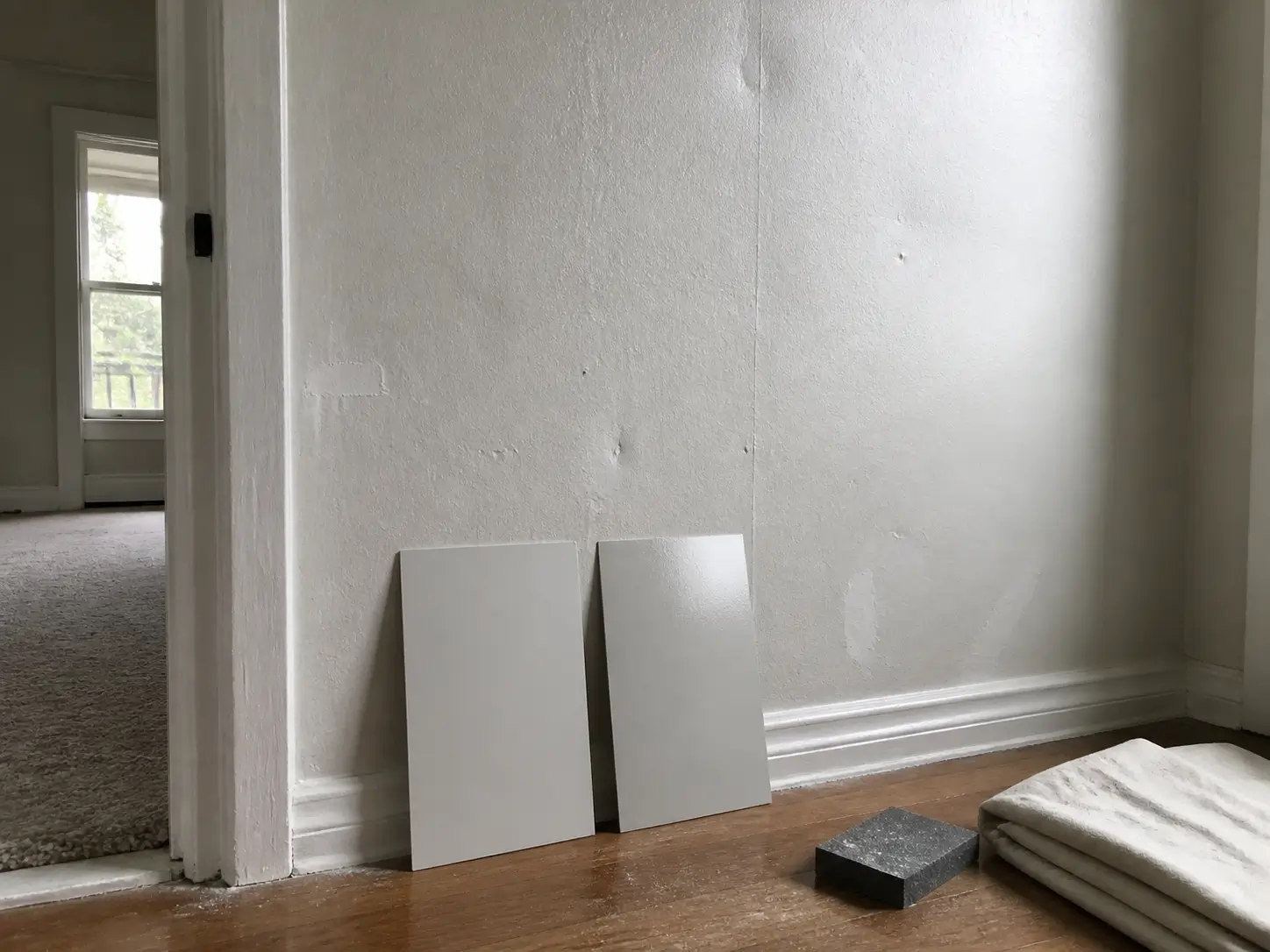
A perfectly smooth wall gives you freedom. An older wall with repairs, orange-peel texture, or uneven skim coating needs more care.
Higher sheens reflect more light and make surface changes stand out. If your walls have visible flaws, flat, matte, or low-luster eggshell will usually be more forgiving. Satin can still work, but the prep may take longer than the painting itself.
Look at the walls from the side with the lights on. That view reveals dents and ridges that disappear when you face the wall directly. Mark the trouble spots, patch them, sand the edges smooth, and prime repaired areas. If you would rather have the prep and finish handled together, our interior painting service covers the full process instead of treating paint as a quick cosmetic layer.
Why paint color looks different in another sheen
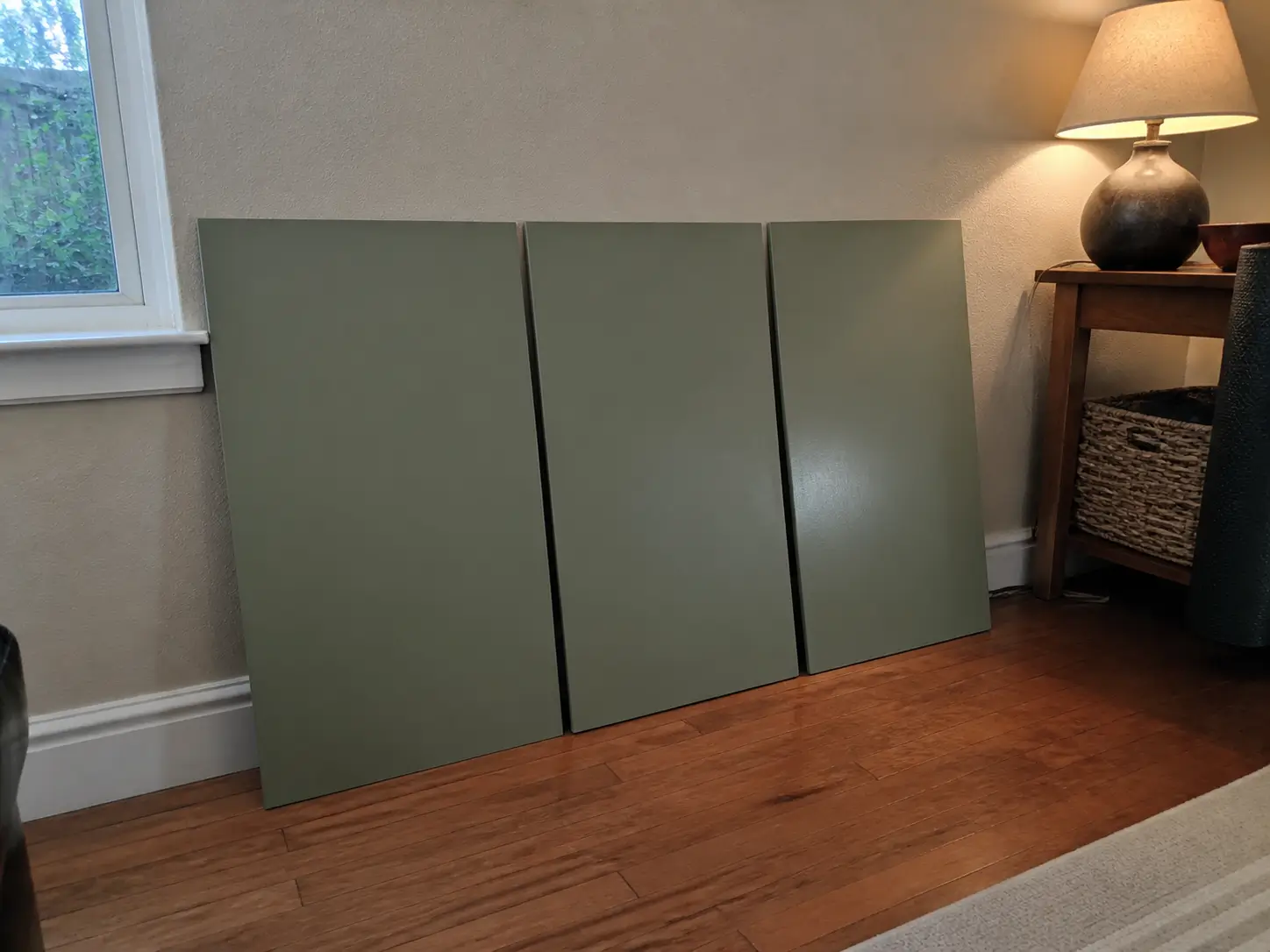
The same color can look richer or lighter when the sheen changes. Satin and semi-gloss reflect more light, so dark colors may appear more vivid and bright colors can feel sharper. Flat and matte absorb more light and often make a color look softer.
This is one reason a tiny color chip can mislead you. Test the actual paint and finish on a sample board, then move it around the room. Check it in morning sun, afternoon shade, and artificial light. A color you liked in matte may feel busier in satin.
Finish also helps separate surfaces. A common setup is eggshell on walls, flat on ceilings, and semi-gloss on trim. The small change in reflection gives the room cleaner edges without adding another color. If you are still deciding which coating belongs where, our guide to interior vs. exterior paint explains why the formula matters as much as the finish.
Common paint finish mistakes
Choosing sheen by shine alone is a mistake. A finish can look beautiful on a sample and become annoying if every mark needs special treatment.
Using semi-gloss across damaged walls because it sounds more durable can also backfire. It may clean well, but it will put the repairs on display. Better prep or a durable lower-sheen product usually gives a nicer result.
Do not assume every room needs a different paint. Many homes can use one quality eggshell on the living room, bedrooms, office, and dining room, then switch to satin in the kitchen, bathrooms, and hallways. Fewer products make touch-ups easier later.
Write down the brand, product line, color, and sheen. “Soft white eggshell” is not enough information when you need another quart two years from now.
FAQs
Is eggshell or satin better for walls?
Eggshell is better for many living rooms, dining rooms, offices, and adult bedrooms because it balances a soft look with reasonable washability. Satin is better for kitchens, bathrooms, hallways, kids’ rooms, and other spaces that need more cleaning.
What paint finish hides wall imperfections best?
Flat and matte hide imperfections best because they reflect the least light. Eggshell can also be forgiving. Satin, semi-gloss, and high gloss tend to expose dents, patches, and uneven texture.
Can I use the same paint finish in every room?
You can use eggshell across many dry living spaces, but busy or damp rooms usually benefit from satin. Ceilings are generally best in flat, while trim and doors often use semi-gloss.
Is matte paint washable?
Some matte paints are washable, especially premium products designed for busy homes. Others mark more easily. Check the cleaning and scrub-resistance claims for the exact product instead of relying only on the word “matte.”
Should walls and trim have the same finish?
They can, but most rooms look cleaner with a slight contrast. Eggshell walls paired with satin or semi-gloss trim create definition and give doors and baseboards a tougher, easier-to-clean surface.
Final thoughts
For most homes, the best paint finish for walls follows a simple pattern: eggshell or matte in quieter living spaces, satin where moisture or traffic is higher, and flat on ceilings. Semi-gloss belongs mainly on trim, doors, cabinets, and select high-use areas.
The room is only half the decision. Wall condition, lighting, ventilation, and the specific paint formula can push the answer one step flatter or shinier. Test a real sample before committing. If you want help pairing the right product and sheen with each room, our residential painting team can build that choice into the project from the start.

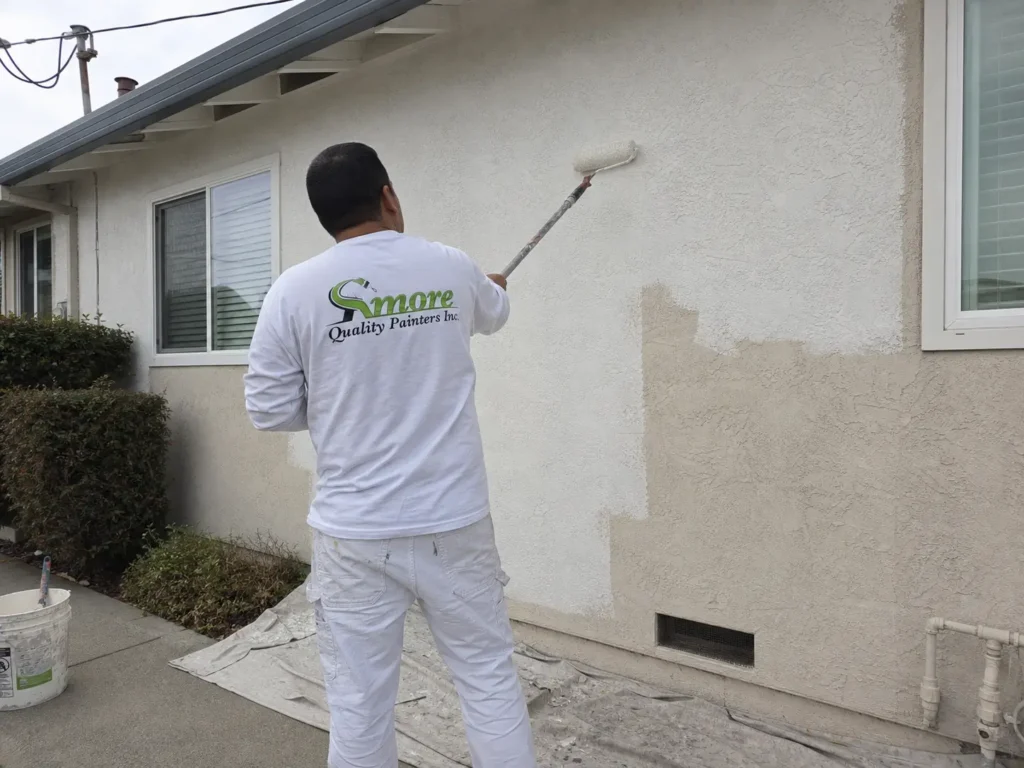
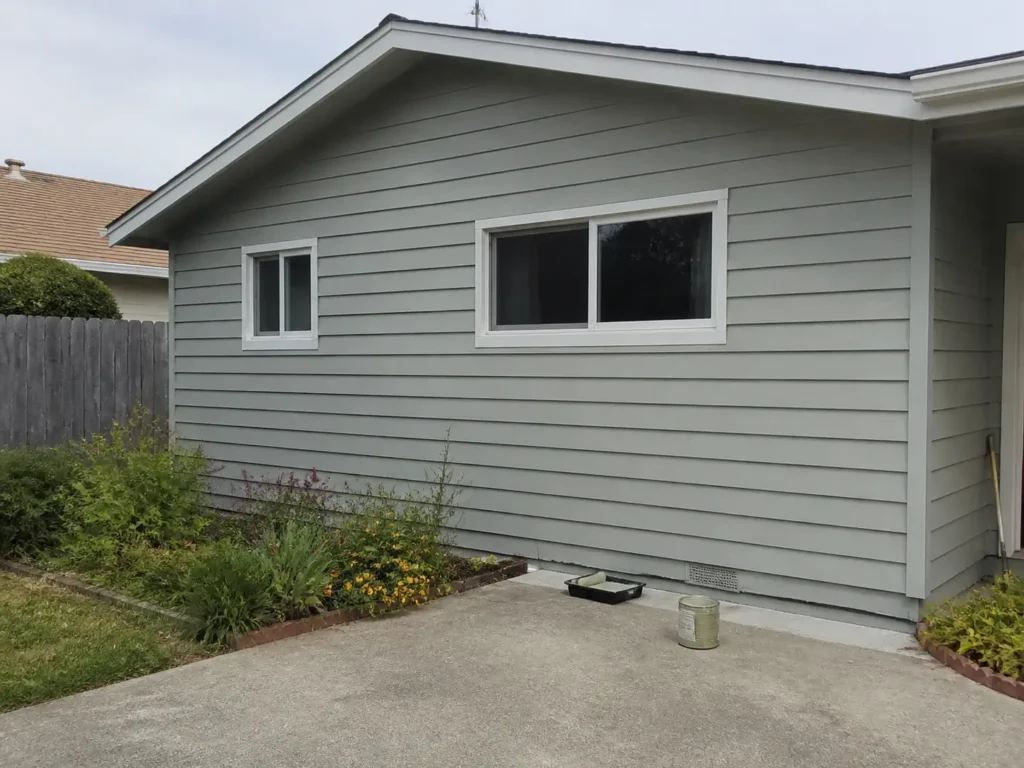

The shaded wall thing is real. That side of ours is always the problem
We are planning exterior paint and this gave me a few questions to ask
I like September for this. Warm but not usually miserable
If you live near fog, the morning start time matters a lot
I always thought painters delayed because they were busy. Sometimes it really is the weather
This makes sense. Paint is too expensive to rush the weather
The best month is probably whatever month gives you a boring dry week
Not all painters explain this, so its nice to know what to ask
Good info. I need to ask the painter about the west-facing wall
We did ours in April and got lucky, but I was watching the forecast the whole time
I am in the East Bay and summer afternoon heat is serious
Early fall sounds like the least annoying option
This sounds exactly like why our old paint bubbled near the windows
I would not have thought a sunny day after rain could still be a problem
The article is right. Bay Area painting is not one-size-fits-all
Our house has one side under trees and it takes forever to dry
Good reminder to ask about curing time, not just how many days the job takes
Damp mornings are sneaky. Everything looks fine from inside
We need trim done and I might wait until September now
If the crew knows the area, they probably schedule around this stuff already
This is making me rethink doing it in peak summer
The coast is tricky. Fog in the morning, sun in the afternoon, damp again by night
I did not expect wall temperature to matter but now it seems obvious
The HOA approval part is too accurate. Ours took 3 weeks for beige
I guess the best time is when the weather is boring for a few days
This would have saved me some confusion when getting quotes last year
My parents painted in August and it worked, but they had a really careful crew
We painted in June and it was fine but the crew avoided the sunny wall until later
The weather window is the whole game apparently
I always forget that shade can be a problem too, not just heat
Good call on not rushing before rainy season. Everyone tries to squeeze it in
The local weather part matters. My friend in Daly City has totally different issues than me
This explains why some painters wont start even when the customer wants them to
I wouldnt risk exterior paint in a wet week. Too expensive to gamble
We had a fence stained too soon after rain and it looked blotchy
My siding looks dry before noon but if you touch it early it is still damp
The surface temp thing is new to me. Makes sense though
I think fall is underrated for house projects in general
This feels like practical homeowner advice, not just generic paint tips
Spring booking fills up crazy fast. Learned that the hard way
I am glad winter was mentioned for interiors. Thats probably when we will do bedrooms
The fog part is very accurate. It can be sunny and still damp somehow
Good point about inland heat. East Bay summer is not gentle
Our last painter checked the siding before starting. I get why now
I would rather have them delay than paint over damp wood
No rain is not enough apparently. Good to know
This helped. I was just going to ask for the soonest date
The garage side of our house gets destroyed by sun. I never connected it to paint timing
I always hear spring and summer, but fall seems better honestly
We are closer to the bay and everything stays damp in the morning
The weather here is fake simple. Looks easy but every neighborhood is different
This makes me want to ask painters what time of day they start
The shady side of my house grows mildew faster too, so this tracks
I didnt know direct sunlight could mess with the finish
The article is right about calling early. I waited and got pushed back forever
We waited until the forecast had like 5 dry days. Glad we did
If I had to pick, Id choose fall. Less chaos
The cool night thing is interesting. Bay Area days and nights can be totally different
Our painter used a moisture meter and I thought he was being extra. Guess not
Good reminder that sunny doesnt always mean dry
I am in Castro Valley and mornings stay damp longer than people think
Interior in winter makes sense because at least you can control the house temp
Spring rain can sneak back in too. I would be nervous booking too early
This is the kind of thing I wish contractors explained before the estimate
I wonder how many bad paint jobs are just bad timing and not bad paint
My garage wall faces west and gets roasted. I should mention that when getting quotes
We painted in late September and it was honestly perfect weather
This is useful. I always assumed paint season was just summer
The HOA note got me. They really do take forever for a simple color
I would not do winter exterior unless it was a really dry stretch
Foggy mornings near the water are no joke
The painter we used started early and wrapped before the hot part. Makes sense now
I have a stucco house and never thought about how hot the wall itself gets
This is good timing info without making it too technical
Our trim gets direct sun all afternoon. That probably explains the cracking
I was about to book for July. Maybe I should ask about the sun side first
The funny thing is the Bay Area looks mild but has all these little weather problems
September or early October would be my pick
This sounds like one of those things where local experience matters a lot
I didnt realize paint could fail from being put on when the surface is damp
If a painter says they need to push it because of weather I guess I should not argue
The shady side comment is real. North side of our house is always last to dry
We had to wait for HOA colors too. That was longer than the job
Spring is fine but I hate scheduling anything in spring. Everyone is busy
I like that it mentions different parts of the Bay. Fremont and Pacifica are not the same weather
This makes exterior painting sound less random than I thought
Good to know about morning dew. I always forget that counts as moisture
My uncle painted a rental after one dry day and it did not hold up great
The winter interior idea is actually smart. Never thought of splitting it like that
I would rather book in fall than fight everyone in spring
Summer sounds good until you touch the wall at 3pm
We are in Oakland and the weather changes depending what side of the house youre on
A few dry days in a row seems like the main thing
This is pretty much what our painter told us, just less rushed
I have seen paint peel on trim and now I wonder if it was from bad timing
The fog is why I would not trust a generic painting calendar for this area
Our back fence stayed damp even when the patio was dry. Didnt think about that
I thought October was too late but maybe not around here
Calling early is the real advice. The good crews disappear fast
The direct sun part makes sense. Our front door gets hot to the touch
I still think September is the best Bay Area month for almost anything outside
We got lucky doing ours in May. No rain for a week and it looked clean
This explains why painters always stare at the forecast like weather people
I had no idea siding could hold moisture that long after rain
Good reminder to check more than just the high temp for the day
I live closer to the hills and shade makes a big difference here
Paint drying too fast sounds like one of those problems you dont notice until later
Early fall is probably what we will do. Summer is already too packed
My neighbor painted in spring and had to pause twice because of foggy mornings
I would ask about surface temp now. Never would have asked that before
The article makes sense. Bay Area weather sounds easy until you actually plan something
We did interior painting in January and honestly it was fine. Exterior would be different tho
This is helpful but also makes me realize I should have called two months ago
Our old house had one wall that never dried fast. That side always looked worse
I always thought if it wasnt raining you were good. Guess not
The HOA thing is what scares me more than the weather lol
Spring is nice but trying to get on a schedule then is a pain
I am in Livermore and July on stucco is brutal. You can feel the heat coming off it
This makes me wonder if our last painter rushed it after a damp morning
We painted our fence too late in the day once and it dried kind of weird
I would rather wait a week than pay for paint twice
The coastal fog part is too real. You wake up and everything outside feels wet
I didnt know curing was different than just drying
September feels like the sweet spot to me. Less rain stress and not as crazy hot
My place in Hayward gets damp on one side even when the street looks dry
Good point about cool nights. It can be warm in the day here and still chilly by dinner
We had painters start on the back of the house first because the front gets full sun. Makes more sense now
This is why I keep putting off our exterior. Timing it feels like a whole project by itself
South Bay afternoons get hot fast. I can see why painters dont want direct sun all day
I always figured summer was safest. Didnt think about the paint drying too fast
Our neighbor painted in October and it came out good. I thought that was late but maybe not
Not me reading this after already picking colors with the HOA
I got quoted in June and they couldnt start until August, so yeah call early
Honestly the hardest part is finding a painter who actually shows up when they say they will
The shady side of our house dries so much slower. Never connected that to painting before
My dad painted trim in July and it looked fine, but he started super early and stopped before it got hot
We are near the coast and morning fog ruins everything. Even our deck stays damp forever
Wait so if the siding feels dry but it rained yesterday, thats still a bad idea?
Id probably still do September tbh. Spring is nice but everyone is trying to book then
HOA approval took us almost a month. The painting itself was like 3 days
This explains why our garage side peeled first. That wall gets cooked after 2pm
Fremont weather is weird. It says 72 and sunny but one side of the house is still wet till lunch
We did ours in May and the painter pushed it back two days because the mornings were still damp. I was annoyed but ok fair
lol I always thought paint just needed no rain. didnt know the actual wall temp mattered