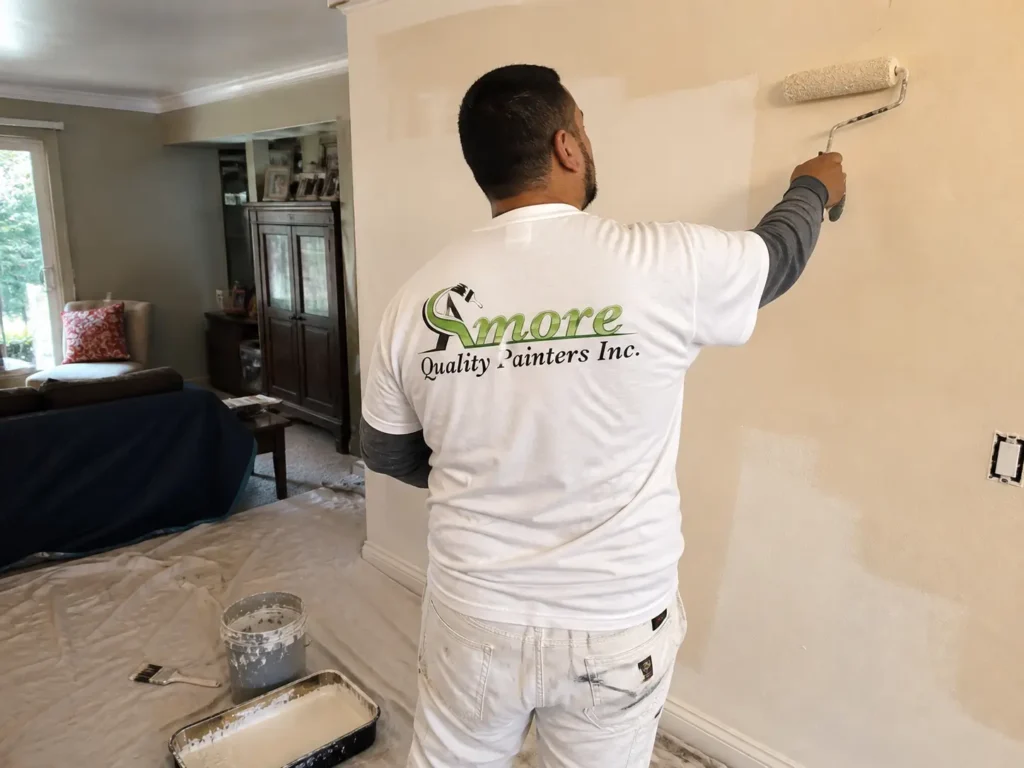
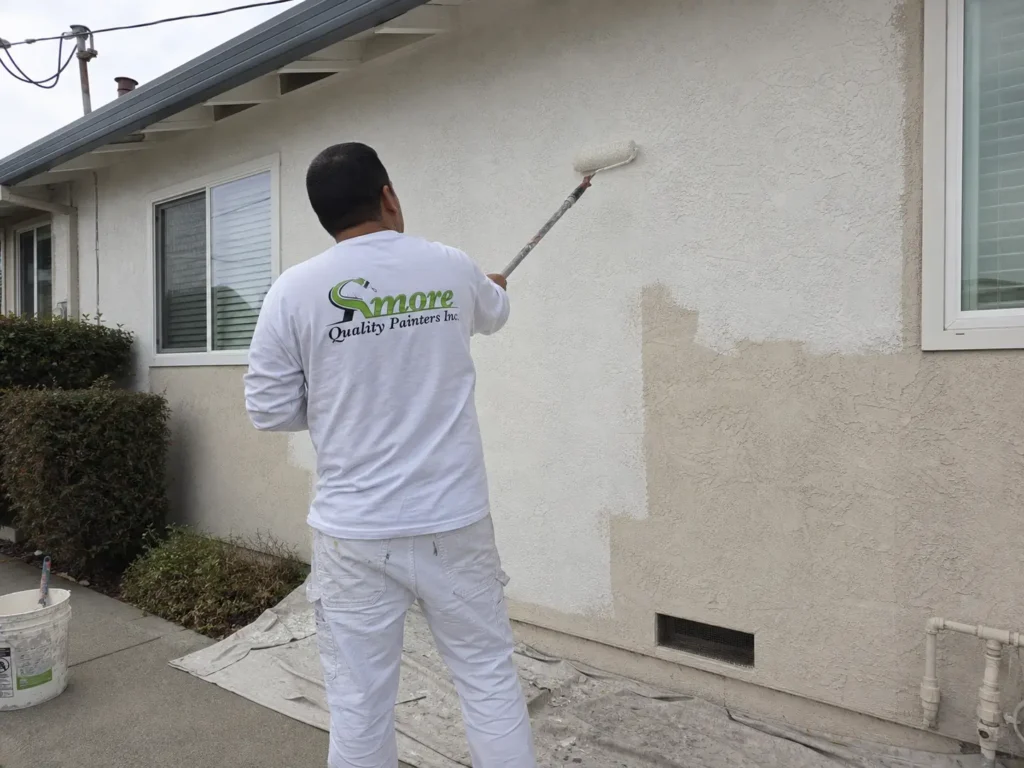
Painting stucco can make a tired exterior look sharp again, but the wall has to be ready first. If you coat stucco while it is dirty, damp, chalky, or damaged, the new finish may fail long before it should.
Rolling paint onto the wall is usually straightforward. Inspection and prep take more time and judgment.
Can you paint stucco?
Yes, most stucco can be painted, provided the surface is ready.
Older stucco needs to be clean, dry, stable, and free of loose coating. New stucco needs time to cure. Behr calls for 30 days, while Benjamin Moore recommends at least 60. Follow the instructions for the coating system you plan to use.
Paint should not be used to hide a moisture problem or a serious crack. If water is getting behind the wall, a new coating may trap the symptoms for a while, but it will not fix the cause.
Inspect the wall before choosing paint
Walk the exterior in daylight. Check around windows, doors, roof transitions, vents, and the lower edge of the wall, where problems often appear first.
Make note of:
- Hairline cracks and wider openings
- Soft, bulging, or hollow-sounding areas
- White powdery deposits
- Dark mildew stains
- Peeling, bubbling, or flaking paint
- Chalk that rubs off onto your hand
- Rust marks near metal fixtures
- Damp areas that do not match the rest of the wall
Hairline cracks are common. A widening crack, a failed repair, bulging stucco, or persistent dampness deserves a closer look before paint goes on.
How to prepare stucco for painting
Most of the work happens before the paint can is opened.
Move anything near the walls. Cover fixtures and protect windows, doors, hardscape, and landscaping. Trim branches that could brush against wet paint.
Remove dirt, chalk, and mildew stains. Pressure washing can help, but an aggressive stream can scar the texture or drive water into cracks. Use a suitable cleaner, rinse thoroughly, and let the wall dry. Behr’s instructions call for at least 24 hours after washing, with longer drying time in cool or humid weather.
Scrape loose paint and feather hard edges so the repair does not show through the finish.
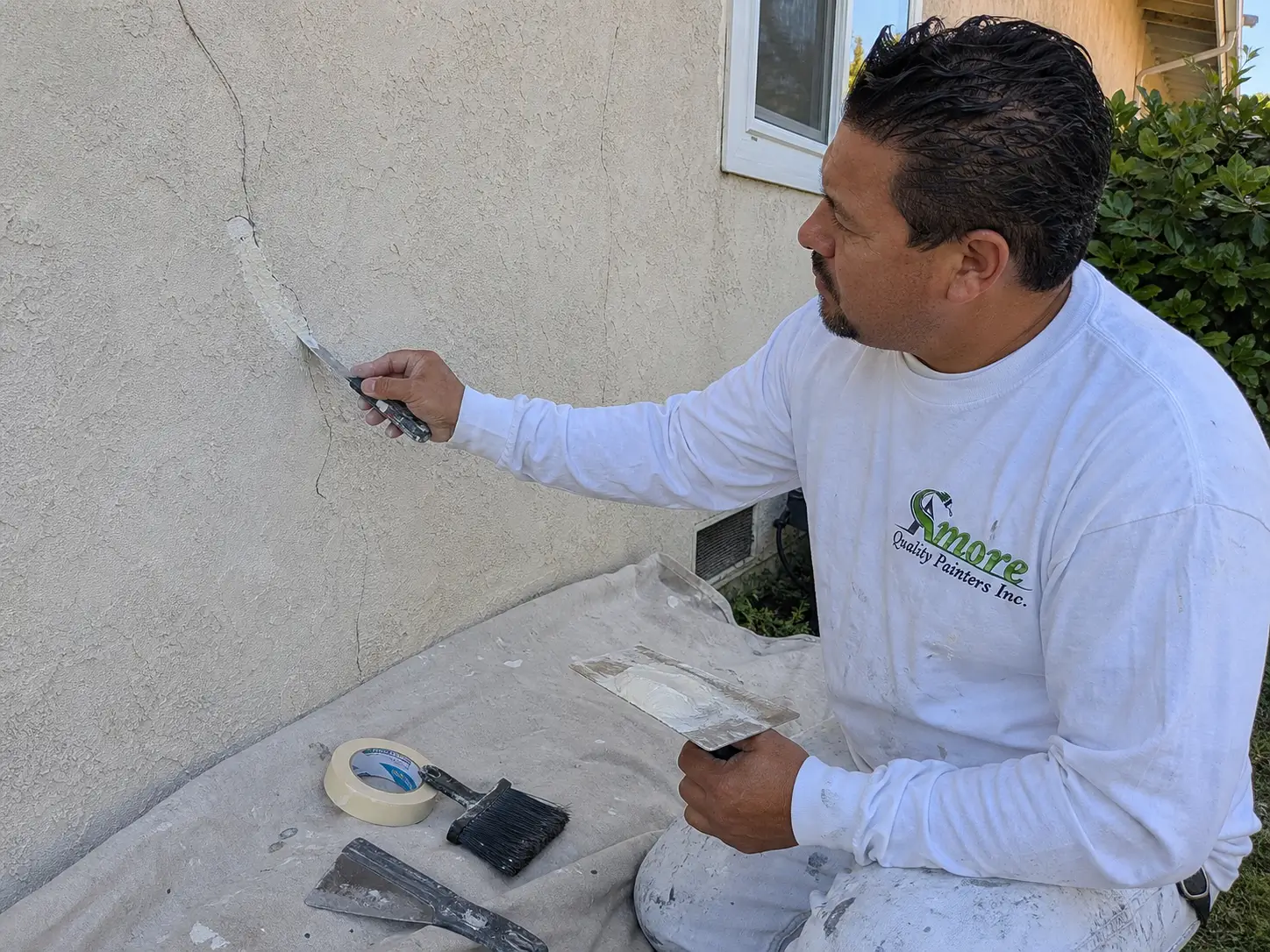
Patch cracks with a repair product made for stucco or masonry, following its width and cure limits. The product that works on a small surface crack may not be right for a deep or moving crack. Around windows, doors, and trim, use a compatible exterior sealant where a flexible joint is needed. Prime patched areas if the coating instructions call for it.
If the house was built before 1978, stop before scraping or sanding painted surfaces. That prep can create lead dust. The EPA recommends lead-safe work practices for pre-1978 homes, and its Renovation, Repair and Painting rule covers many paid projects that disturb painted surfaces in those homes.
What is the best paint for stucco?
For many homes, a quality 100 percent acrylic exterior paint or masonry coating is the practical choice. Confirm that the label lists stucco or masonry as an approved surface.
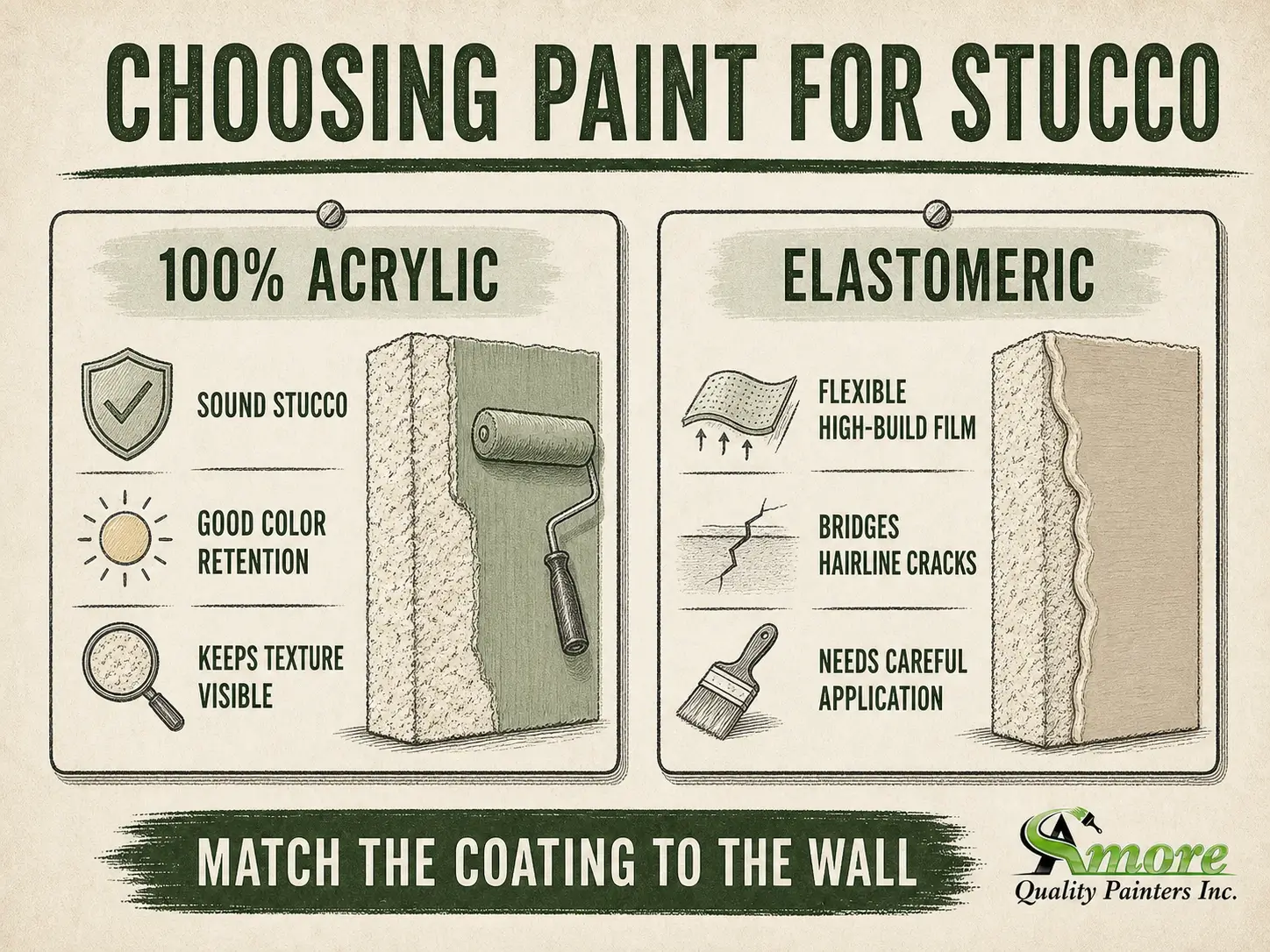
Elastomeric masonry coatings are thicker and can bridge hairline cracks, but that does not make them an automatic upgrade. They require the right surface, preparation, film thickness, and application conditions. They can also change the look of the texture. If the wall has moisture trouble or active cracking, a thick coating is not a substitute for diagnosis and repair.
The new system must be compatible with the existing coating. If the old coating is unknown, test a small area and ask the manufacturer which primer and finish belong together.
Flat finishes are common on stucco because they soften the look of rough texture and minor surface variation. A higher sheen can make every bump and patch more noticeable. Product availability and weather exposure still matter, so choose the sheen as part of the full coating system, not by appearance alone.
Does stucco need primer before painting?
Sometimes. Bare stucco, repairs, stubborn chalk, stains, and questionable adhesion can call for primer or a masonry conditioner. Use one designed for the wall and topcoat.
A previously painted wall with a sound, clean coating may not need a full primer coat. Some masonry paints are self-priming on properly prepared surfaces. Read the technical sheet instead of assuming every wall needs the same process.
When primer is needed, do not mix random products because they happen to be on the same store shelf. Use a primer and finish approved for one another.
How to paint exterior stucco
Once the repairs have cured and the wall is fully dry, the work follows a sensible order.
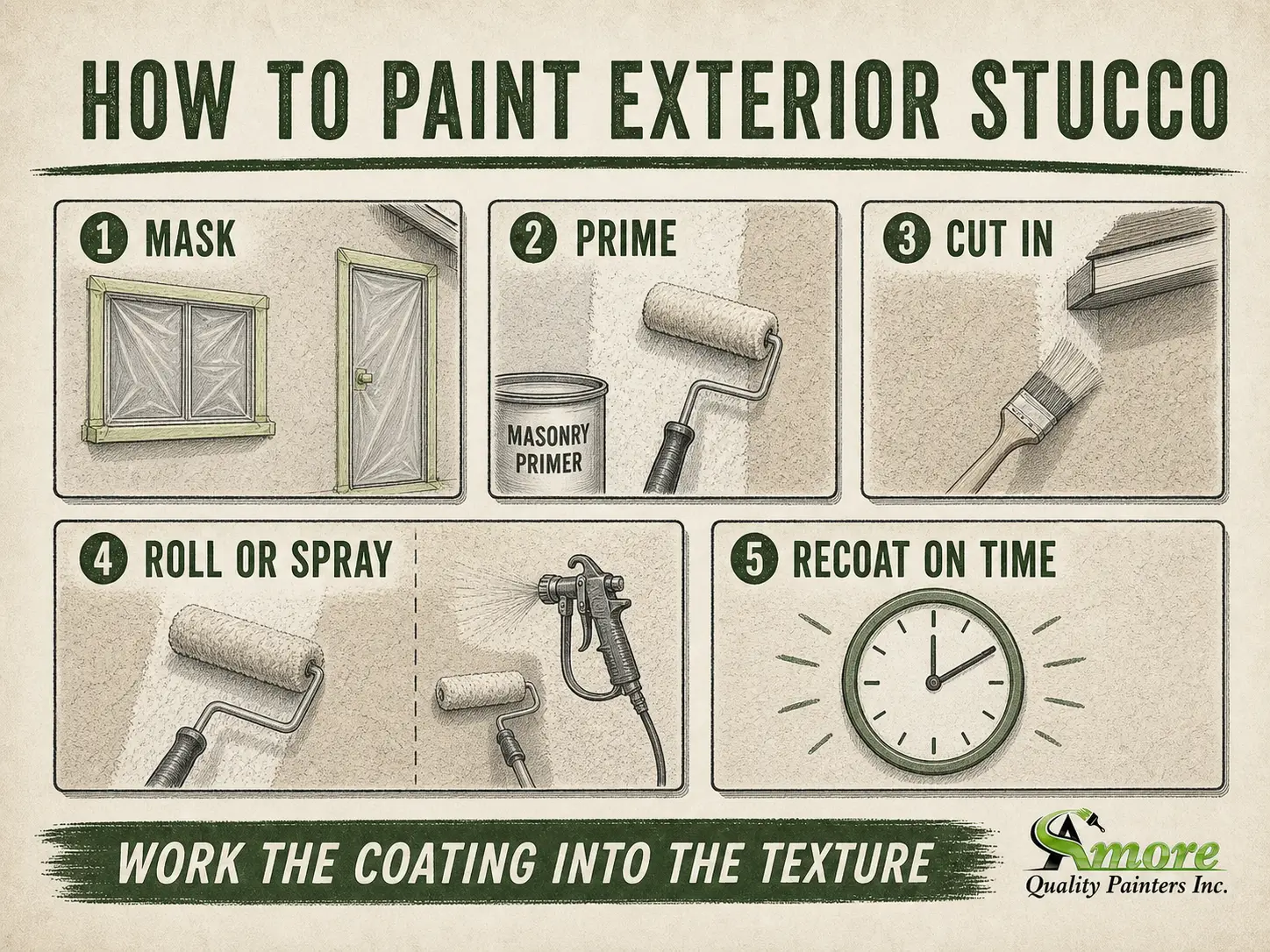
- Mask windows, doors, lights, vents, utility equipment, and nearby surfaces. Cover plants without leaving them wrapped in heat all day.
- Prime the areas or the full wall when the coating system requires it. Work primer into the texture rather than skimming only the high spots.
- Cut in around edges and openings with a brush. A roller nap matched to the depth of the texture will reach the low areas better than a short nap meant for smooth drywall.
- Apply the finish at the manufacturer’s stated coverage rate. If you spray, back-roll or back-brush while the coating is wet so it reaches the recesses and lays down evenly.
- Keep a wet edge and finish at a natural break, such as a corner. Stopping in the middle of a broad wall can leave a visible lap mark.
- Apply the next coat only after the listed recoat time. Cooler air and higher humidity can slow drying.
Stucco usually consumes more paint than smooth siding because the surface area is larger than it looks. Rough stucco may need 30 to 50 percent more paint than a smoother surface. Measure the walls, account for the texture, and buy enough from the same product run when possible.
Weather can change the whole job
The wall may be much hotter than the air in direct sun. Wind can dry paint too quickly, while cool, damp conditions slow it down. Rain and heavy dew can also interfere with a fresh film.
Check the paint label for its allowed air and surface temperatures, then look at the forecast for the full drying window. Work around the house so you are not chasing harsh sun across every wall. Our guide to the best time of year to paint in the Bay Area covers the local timing in more detail.
Common stucco painting mistakes
Many coating failures start before the first full coat.
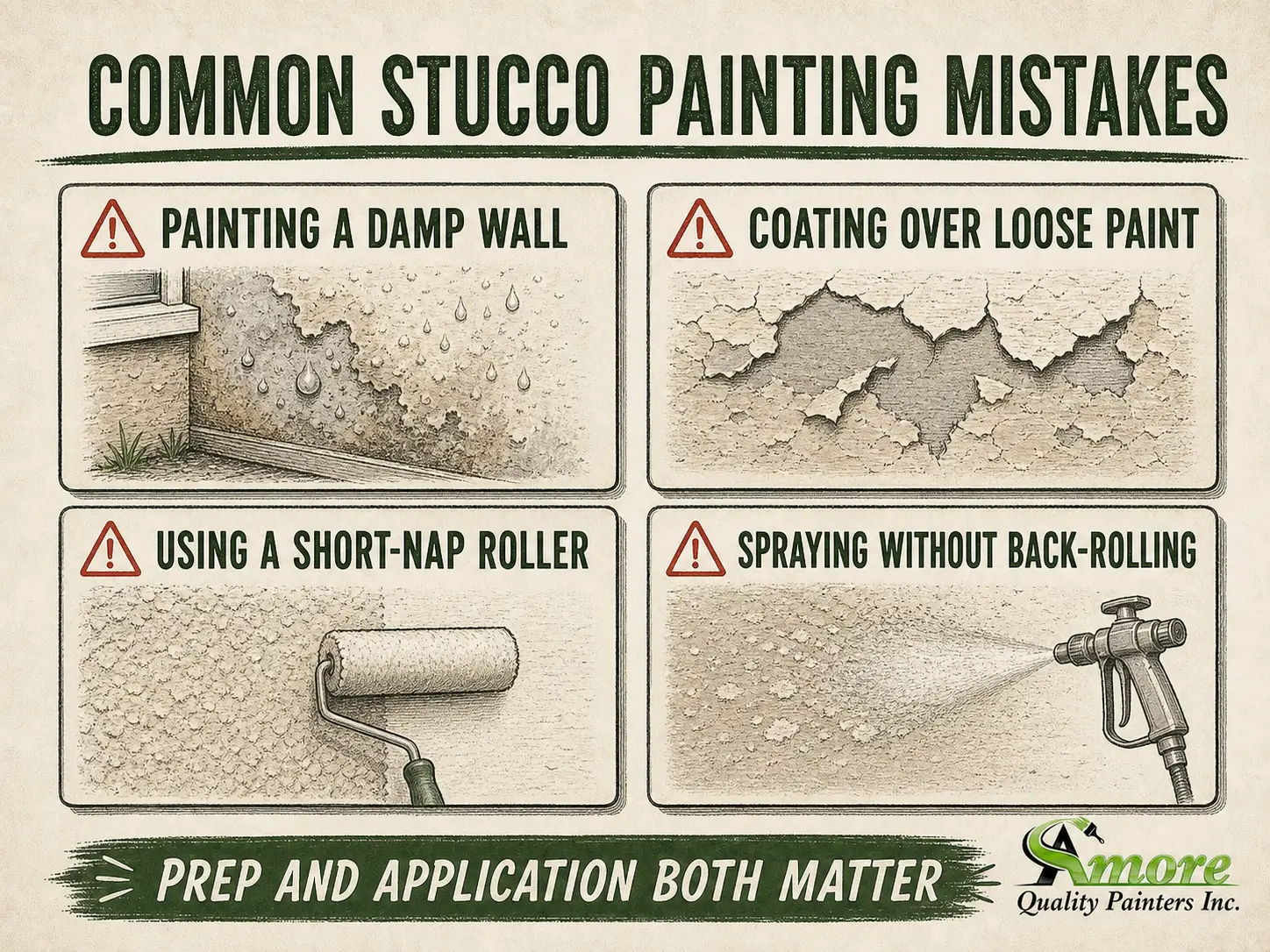
Painting damp stucco can lead to blistering or poor adhesion. Coating over chalk leaves the new paint attached to dust instead of the wall. Filling a moving crack with the wrong patch can make it reappear. A short roller nap may color the high points while missing the deeper texture.
Spraying without back-rolling is another common shortcut. The wall may look covered from several feet away, yet thin or bare pockets remain in the texture. Finally, stretching paint beyond its listed coverage rate leaves a film that is too thin to perform as designed.
Should you paint stucco yourself?
A one-story wall in sound condition can be manageable for an experienced homeowner. A full house, with repairs, masking, ladders, equipment, and a large textured surface, is different. Our house-painting timeline guide explains what affects the schedule.
Bring in a professional when the stucco has widespread cracking, moisture stains, peeling coating, hard-to-reach elevations, or an unknown finish. The same goes for a pre-1978 home when the work may disturb old paint.
If you want the exterior inspected before choosing products, our exterior painting team can look at the surface, explain the prep it needs, and provide a written estimate. That is more useful than picking a premium paint before anyone has checked what is underneath it.
Frequently asked questions
Can you paint over previously painted stucco?
Yes, if the existing paint is firmly attached and compatible with the new coating. Wash the wall, remove loose areas, repair damage, and test any uncertain section. Chalky or glossy coatings may need extra preparation and primer.
Can you pressure wash stucco before painting?
Yes, but use enough control to clean the surface without damaging the texture or forcing water through cracks. Let the wall dry completely before primer or paint goes on.
How many coats of paint does stucco need?
Two finish coats are common, but the correct answer comes from the product instructions and the condition of the wall. Major color changes, porous areas, and heavy texture can affect coverage.
Is acrylic or elastomeric paint better for stucco?
Acrylic exterior paint works well for many sound stucco walls. Elastomeric coatings suit some masonry conditions but need careful product selection and application. The wall’s moisture, cracks, existing coating, and texture should guide the decision.
How soon can new stucco be painted?
Wait until it has cured for the period required by the coating manufacturer. Published recommendations commonly range from 30 to 60 days. Weather, mix, and product choice can affect the right schedule.
How often should painted stucco be refreshed?
There is no reliable calendar for every house. Sun exposure, moisture, color, coating quality, and preparation all affect service life. Check the walls each year for chalk, fading, cracks, and loss of adhesion. Our guide to how often California homes need repainting explains the larger maintenance picture.
What affects the cost to paint a stucco house?
Wall area, texture, access, repairs, existing coating, masking, and product choice all affect the estimate. A sound one-story exterior needs less labor than a tall house with cracks, peeling paint, or detailed trim. An onsite inspection is the best way to price the actual surface.
Final thoughts
Painting stucco is mostly a surface-preparation job with paint at the end. Clean walls, dry material, sound repairs, compatible products, and suitable weather give the finish a real chance to last. Skip one of those pieces and even expensive paint can disappoint.
If the wall is cracked, chalky, or hard to read, have it inspected before committing to a coating. Checking first costs less than stripping and repainting a failed finish.