The cost to paint kitchen cabinets usually lands between $2,500 and $6,500 for a complete professional job. A small, straightforward kitchen may cost less. A large kitchen with detailed doors, repairs, an island, or a major color change can run well above that range.
That spread is wide because painters aren’t pricing a bucket of paint. They’re pricing dozens of doors and drawer fronts, careful prep, a controlled finish, and several days of work in the room your household uses most.
Average cost to paint kitchen cabinets
For early budgeting, these ranges are reasonable. An in-home estimate will be more specific.
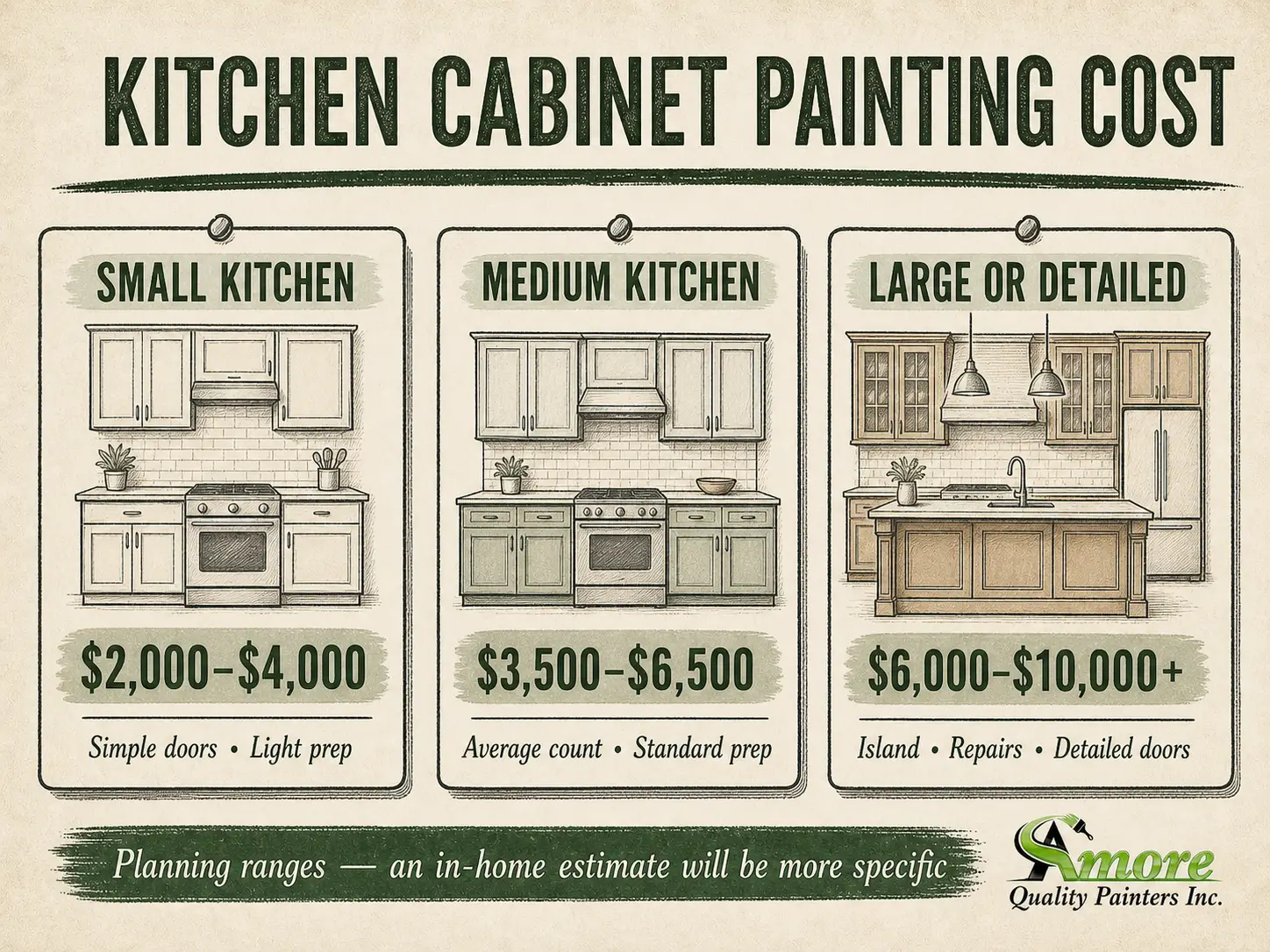
| Kitchen size | Typical scope | Planning range |
|---|---|---|
| Small | Limited uppers and lowers, simple doors, little repair work | $2,000 to $4,000 |
| Medium | Average cabinet count, doors and drawer fronts, standard prep | $3,500 to $6,500 |
| Large or detailed | Many doors, island panels, glass fronts, repairs, complex masking | $6,000 to $10,000+ |
Bay Area homeowners should generally plan toward the middle or upper end of national ranges. Labor is a major part of cabinet painting, and federal wage data for painters places the San Francisco, Oakland, and San Jose areas among the country’s higher-paying markets.
Two kitchens with the same number of doors can still price out very differently. One may be ready after a thorough cleaning and light prep. The other may have peeling coatings, loose veneer, grease in the corners, and old hardware holes to fill. A painter needs to see the cabinets before giving you a dependable number.
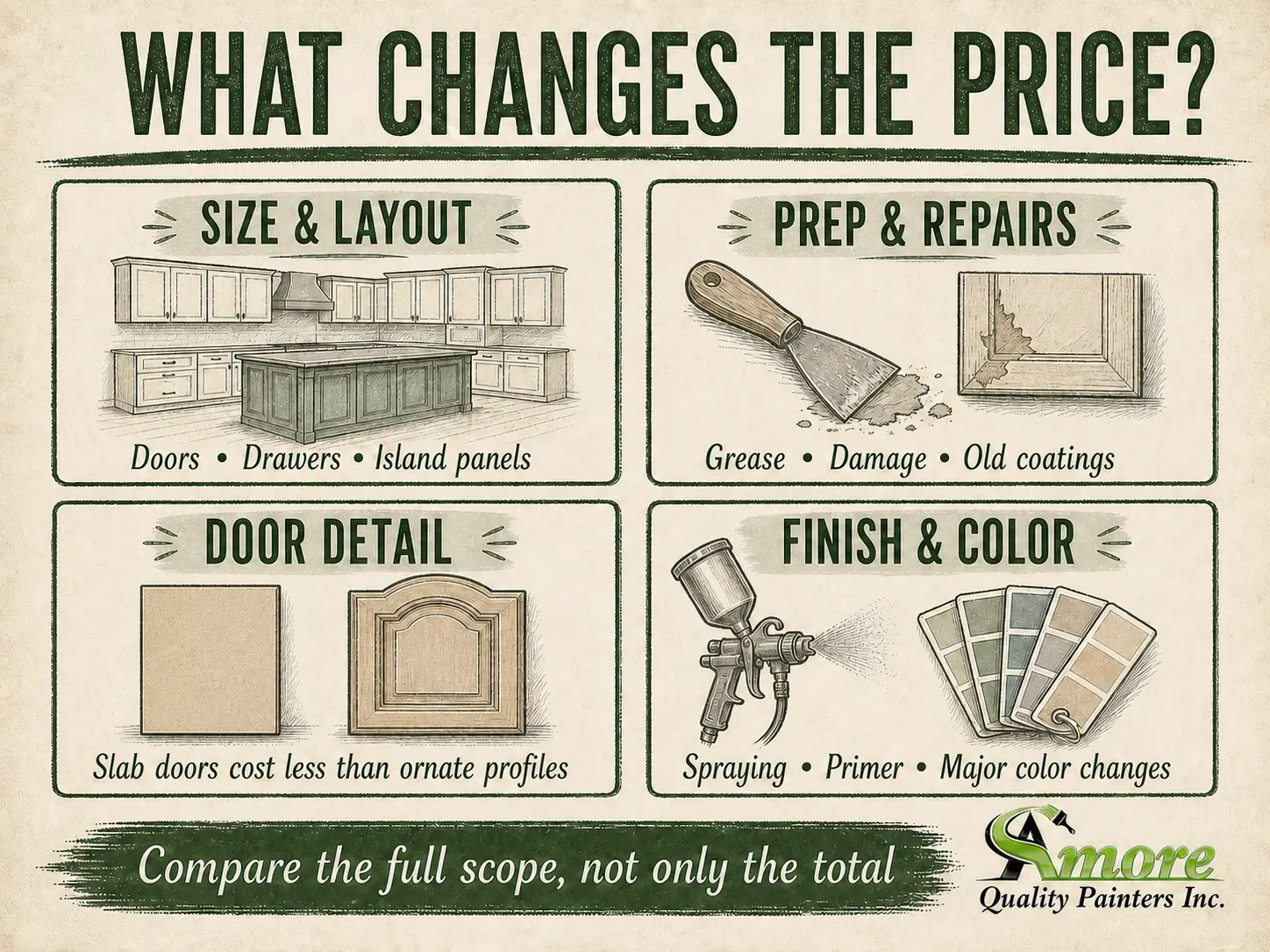
What changes the price?
Cabinet count and layout
Painters often begin with the number of doors and drawer fronts, but the boxes matter too. End panels, crown molding, open shelves, wine racks, islands, and glass-front doors all add surfaces and detail work.
A compact kitchen with 18 plain Shaker doors is a different job from one with 18 raised-panel doors, eight drawers, a large island, and cabinetry running to the ceiling. Ask what the quote includes instead of comparing totals alone.
Grease, damage, and old coatings
Kitchen cabinets collect oils that ordinary dusting doesn’t remove. Every surface needs to be cleaned and degreased before primer or paint can bond properly. Chipped edges, dents, loose veneer, failing paint, and unused hardware holes add more prep time.
Old coatings can also be unpredictable. A glossy factory finish may need more abrasion and adhesion testing than previously painted wood. If the surface isn’t clean, dry, dull, and sound, even expensive cabinet paint can fail early.
Homes built before 1978 need another safety check. Sanding or otherwise disturbing old coatings can create lead dust. The EPA’s Renovation, Repair and Painting guidance explains when lead-safe practices and a certified contractor are required.
Door style and cabinet material
Flat slab doors are faster to prep and coat than ornate doors with grooves, routed edges, and applied trim. Wood, MDF, laminate, and previously finished surfaces don’t all accept the same primer or prep process.
Material doesn’t automatically decide whether a cabinet can be painted, but it can change the products, testing, and labor needed to get dependable adhesion.
Brush, roller, or sprayed finish
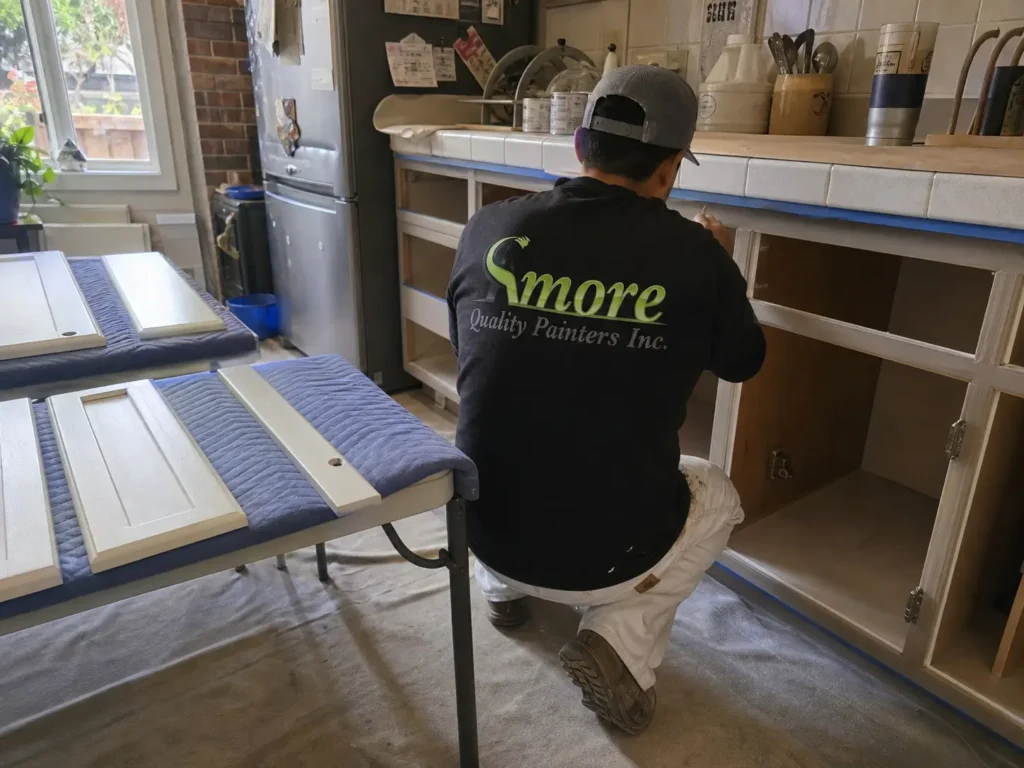
A sprayed finish can look exceptionally smooth, but the surrounding kitchen must be protected from overspray. Doors and drawer fronts may also be taken off-site for controlled spraying. Hand-applied finishes can work well too, especially when the coating levels properly, but detailed doors take time.
Don’t stop at asking, “Do you spray?” Ask how the crew prepares the surfaces, controls dust, tests adhesion, and handles the doors between coats.
Color changes and finish choice
Going from white to another light color is usually simpler than taking dark stained wood to crisp white, or covering a bold color with a much lighter one. Strong changes can call for a stain-blocking or high-hiding primer and extra finish work.
Sheen matters as well. Cabinet coatings need to stand up to frequent touching and cleaning. A product made for cabinets, doors, and trim is a better fit than ordinary wall paint.
Painting cabinet interiors
Most cabinet painting quotes cover the visible exterior surfaces, doors, drawer fronts, face frames, and exposed panels. The insides are often excluded unless you request them.
Painting interiors adds a surprising amount of work. The cabinets must be emptied, shelves removed or masked, surfaces cleaned, and the coating allowed to cure before dishes and pantry items go back. If you want the interiors painted, make sure that line appears in writing.
What should a professional quote include?
A lower quote isn’t a bargain if half the job is missing. A clear professional estimate should spell out:
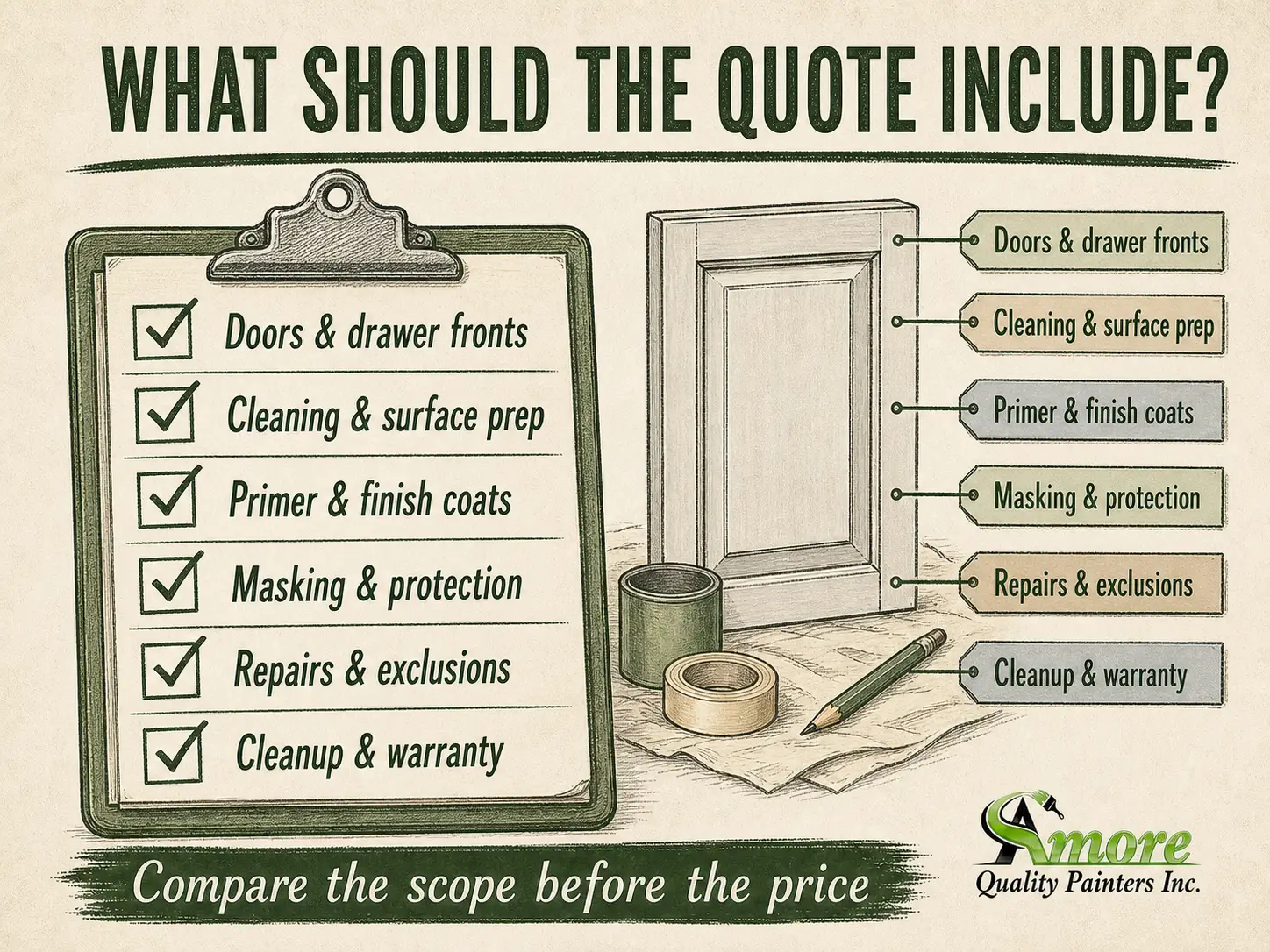
- Which doors, drawer fronts, boxes, panels, trim, and cabinet interiors are included
- Door and hardware removal, labeling, storage, and reinstallation
- Cleaning and degreasing
- Surface repairs and which repairs cost extra
- Sanding, deglossing, or adhesion testing
- Primer and finish-coat products
- Number of primer and finish coats, when specified by the coating system
- Masking and protection for floors, counters, appliances, and adjoining rooms
- Whether doors are sprayed on-site or finished elsewhere
- Cleanup, touch-ups, and the project warranty
Cabinet painting costs more than repainting a wall because the visible spraying or rolling is only one part of the job. Sherwin-Williams’ cabinet process includes removing hardware, degreasing, checking adhesion, priming, sanding, and applying the finish coats. Those quiet prep steps take time. They’re also where cut-rate cabinet jobs usually fall apart.
DIY vs. professional cabinet painting cost
DIY can reduce the cash expense, but it trades that savings for time, kitchen disruption, and finish risk.
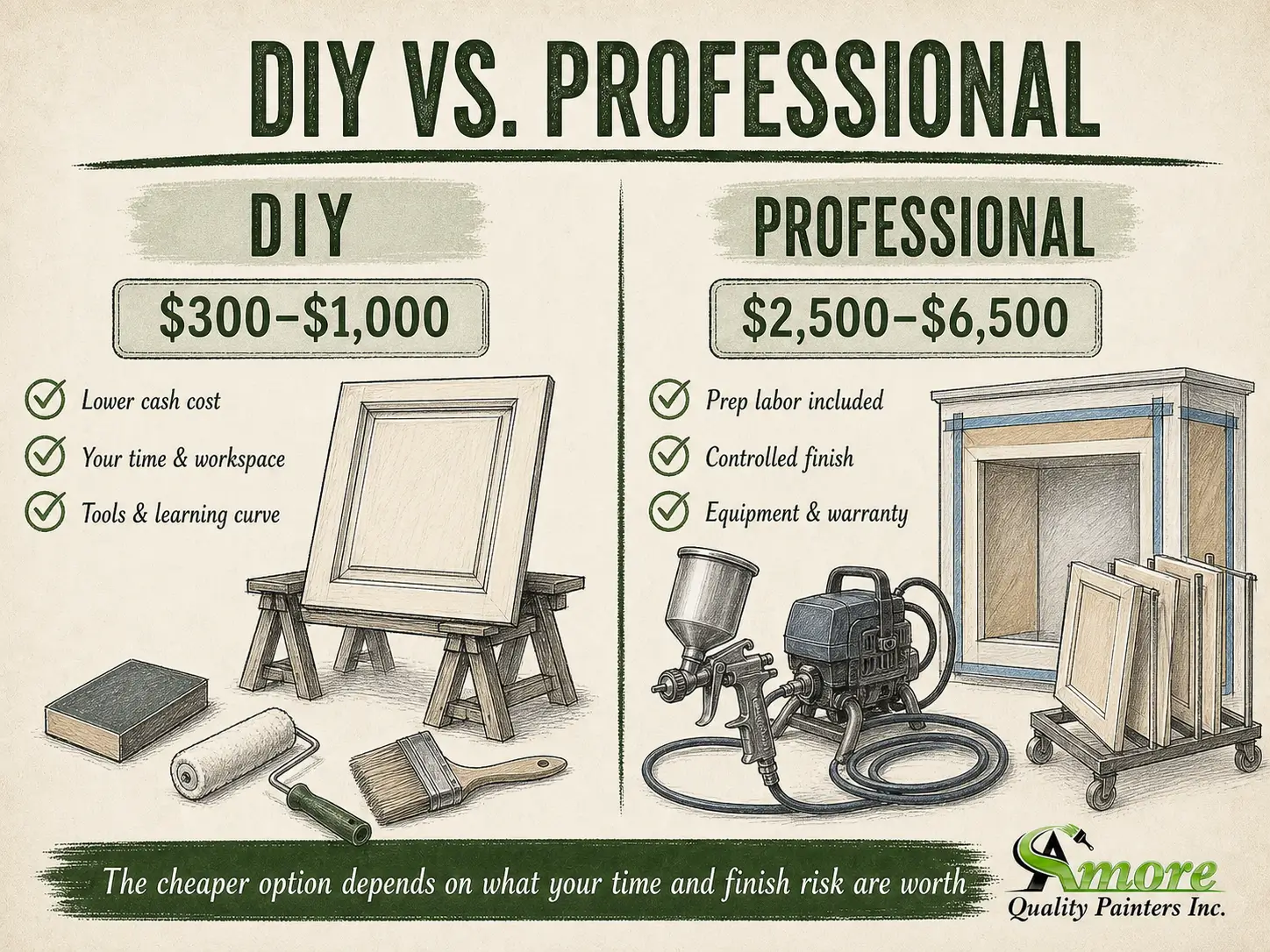
| Option | Typical cash cost | What the number doesn’t show |
|---|---|---|
| DIY | About $300 to $1,000 | Your labor, workspace, sprayer or tool learning curve, and fixing mistakes |
| Professional | About $2,500 to $6,500 for many kitchens | Prep labor, masking, equipment, finish control, insurance, and warranty |
A careful DIY job may require degreaser, sandpaper, patching materials, primer, cabinet-grade enamel, brushes or rollers, masking supplies, drying racks, and possibly a sprayer. It also takes patience. Manufacturer instructions treat cabinet painting as a multi-day project, not a quick weekend coat.
Hiring a professional makes the most sense when you want a very smooth finish, have a busy household, own detailed or damaged cabinets, or can’t dedicate a clean space to dozens of doors. Our cabinet painting and refinishing service is built around that full prep-and-finish process, not just the final coat.
Is painting worth it compared with replacing cabinets?
Painting is often a strong value when the cabinet boxes are sturdy, the layout works, and the doors are in good condition. You keep the existing cabinetry while changing the color and feel of the kitchen.
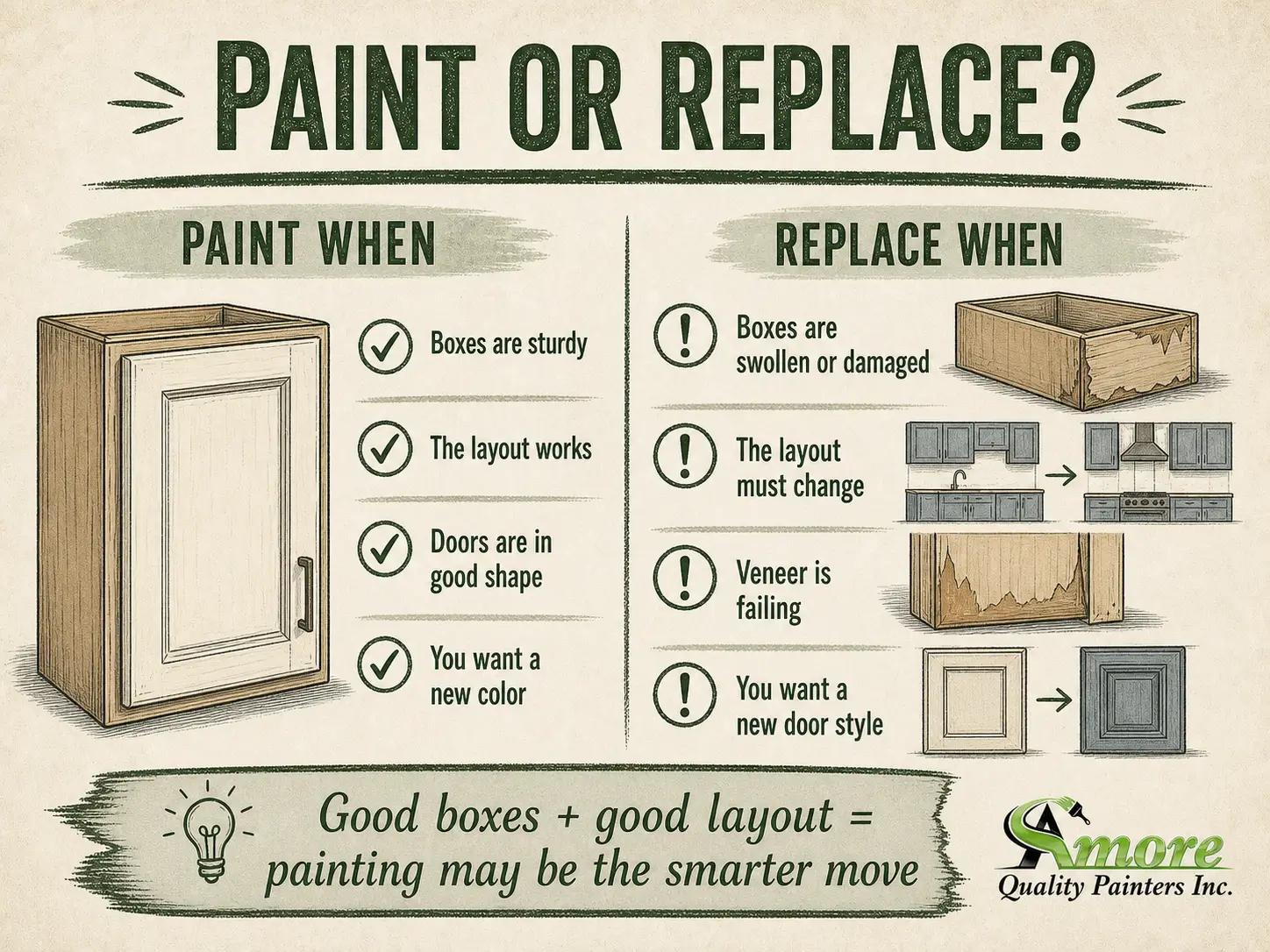
It is less useful when boxes are swollen, veneer is failing across large areas, the layout needs to change, or you want a completely different door style. In those cases, repairs, refacing, or replacement may make more sense. Our guide to painting kitchen cabinets versus replacing them walks through that decision in more detail.
How to get an accurate cabinet painting estimate
Start by counting the doors and drawer fronts, then take a few photos of the full kitchen. Note any peeling paint, water damage, loose veneer, deep grease buildup, or hardware changes you want.
When you compare estimates, use the same scope for every painter. Ask each one:
- Are the doors and drawer fronts removed and labeled?
- What cleaning and surface preparation are included?
- Which primer and finish products will be used?
- Are end panels, crown molding, the island, and cabinet interiors included?
- How will the kitchen and nearby rooms be protected?
- Where will the doors be finished and stored while curing?
- What could change the quoted price after work begins?
A detailed scope is more useful than a vague per-door price. It shows what you are actually buying and makes competing quotes much easier to compare.
Frequently asked questions
How long does professional cabinet painting take?
Many kitchens take roughly four to seven working days, though the schedule depends on cabinet count, repairs, coating dry times, and whether doors are finished off-site. Usable dry time and full cure time are not the same, so follow the painter’s instructions before heavy cleaning or hard use.
Can kitchen cabinets be painted without sanding?
Sometimes, but “no sanding” should never mean “no prep.” Cabinets still need thorough cleaning and an adhesion test. Some bonding primers can work on clean, paintable surfaces without full sanding, while glossy or failing coatings may need abrasion or removal. Benjamin Moore’s cabinet guidance calls for a sound, prepared surface and the correct primer for the existing finish.
Does the cost include new hardware?
Usually not. Reinstalling existing knobs and pulls is commonly included, but new hardware, filling old holes, drilling a different pattern, or adding soft-close hinges may cost extra. Put those changes in the estimate before the project starts.
Is it cheaper to paint cabinets before installing new countertops?
The order can affect masking and scheduling, but it doesn’t automatically reduce the cabinet painting price. If both projects are planned, tell the painter and countertop installer early so they can choose a sequence that protects each finished surface.
How long will painted cabinets last?
Longevity depends on surface preparation, coating choice, curing, daily wear, and how the cabinets are cleaned. A properly prepared cabinet-grade finish can serve for years. Harsh scrubbers, standing water, grease buildup, and slamming doors shorten its life.
Final thoughts
The cost to paint kitchen cabinets makes more sense once you look beyond paint and count the prep, individual pieces, masking, coating steps, and reassembly. For many complete professional projects, $2,500 to $6,500 is a sensible planning range, with larger or more complex Bay Area kitchens costing more.
If your cabinets are structurally sound and the layout still works, painting can give the kitchen a major visual change without the cost and disruption of replacement. For a scope and price based on your actual cabinets, request a free estimate.