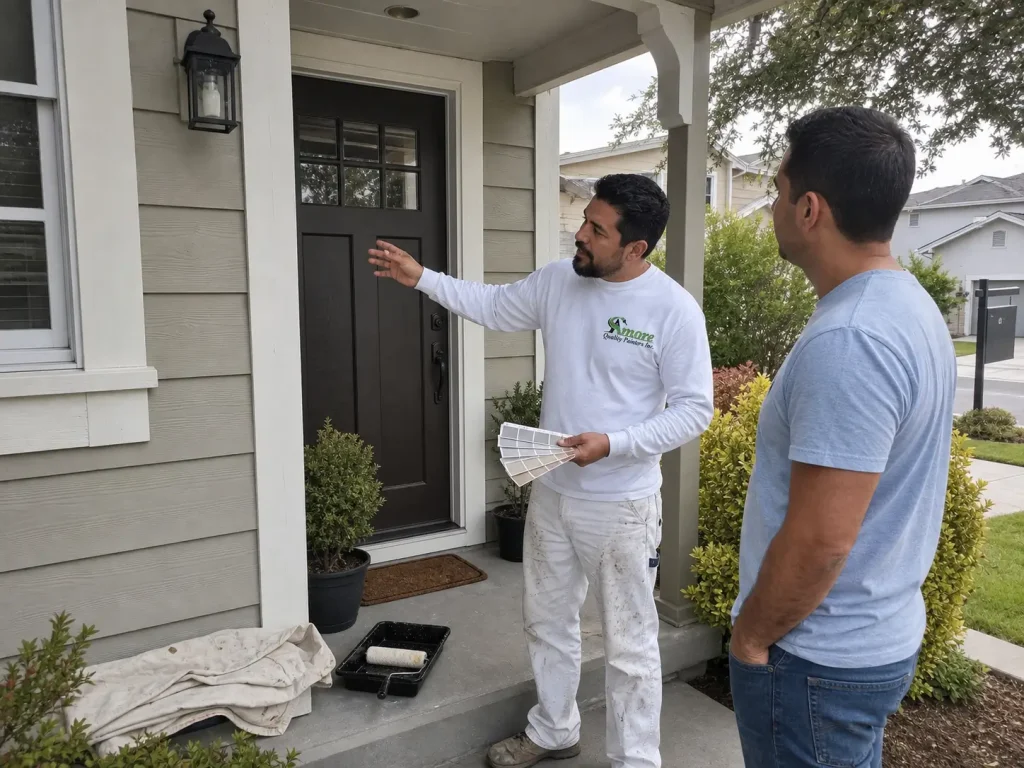
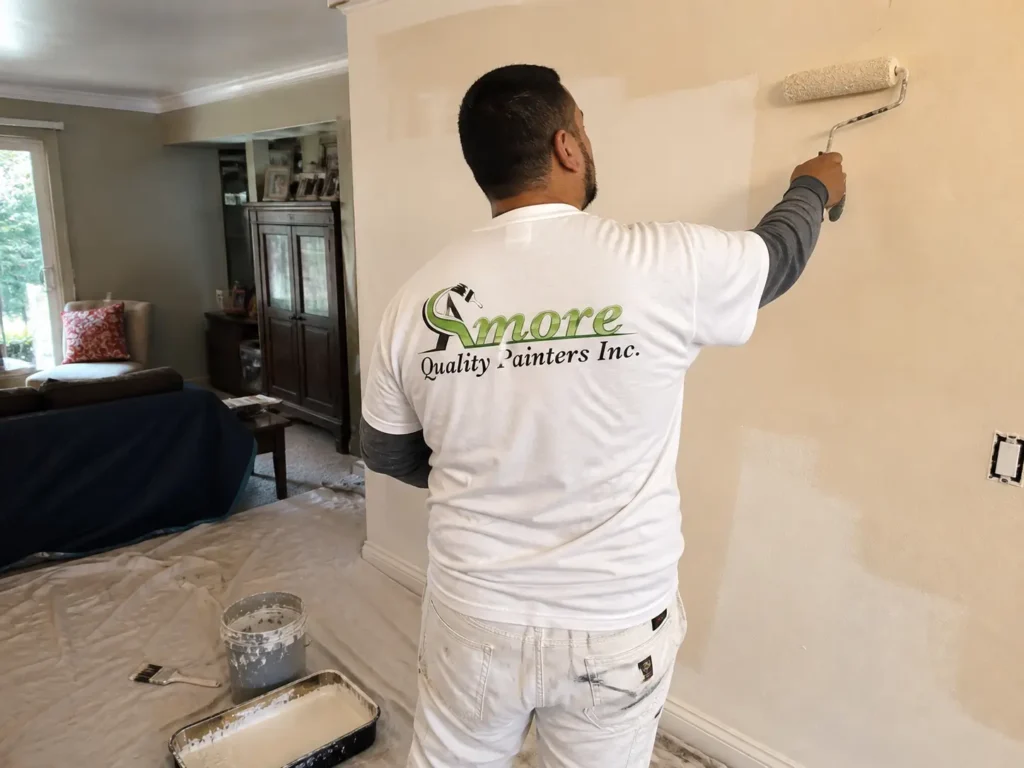
Painting a house can take anywhere from a day to a couple of weeks. That’s a wide range, but it makes sense once you compare a single empty bedroom with a two-story exterior that needs scraping, repairs, and careful work around windows.
For many professionally painted homes, an interior takes about three to seven days and an exterior takes about four to seven days. The condition of the surfaces matters more than most homeowners expect. A clean wall in good shape moves quickly. Peeling siding or cracked stucco does not.
How long does it take to paint a house?
These planning ranges assume a professional crew, normal prep, and a home that does not need major repairs.
| Project | Typical professional timeline |
|---|---|
| One bedroom or office | 1 to 2 days |
| Several interior rooms | 2 to 5 days |
| Whole-house interior | 3 to 7 days |
| Average house exterior | 4 to 7 days |
| Large or detail-heavy exterior | 1 to 2 weeks or longer |
A solo DIY painter will usually need much longer. Painting happens around normal life, and one person has to handle every bit of prep and cleanup.
Square footage helps with estimating, but it is not enough by itself. An open layout with smooth walls moves faster than high ceilings, built-ins, damaged trim, and six paint colors.
Where the time actually goes
Rolling paint onto a wall is often the fastest part. The rest of the schedule is spent getting the house ready, waiting between coats, and checking the finish.
Setup and protection
Before a can opens, furniture has to be moved or covered. Floors, counters, fixtures, landscaping, and anything else near the work area need protection. Switch plates and hardware may come off. Exterior crews also have to set ladders safely and plan access around roofs, trees, and utility lines.
Good protection takes time on the first day, but it saves time later. Paint specks on hardwood or overspray on a parked car turn a simple job into a problem nobody wants.
Repairs and surface prep
Prep can include washing, scraping loose paint, sanding rough edges, patching holes, caulking gaps, repairing minor stucco cracks, and spot priming bare areas. The work changes with the surface.
Fresh drywall is different from a wall with old water stains. Smooth siding is different from peeling fascia. Cabinets, doors, and detailed trim take longer than broad walls because there are more edges and smaller surfaces to handle.
This is also where older homes need extra care. The EPA’s RRP Rule generally requires paid firms working in pre-1978 homes and child-occupied facilities to be certified and use lead-safe renovation practices when they disturb paint. Testing, containment, and lead-safe work can add time, but they are not steps to rush.
Primer, paint, and recoat time
Some surfaces need a full primer coat. Others only need primer on repairs or bare spots. Then each coat needs enough time to dry before the next one goes on.
There is no single recoat time for every paint. Product, surface, temperature, and humidity all affect it. Benjamin Moore’s paint drying guidance gives one popular interior product a one-hour dry time, a one- to two-hour recoat window, and a 14-day cure time. Other coatings take longer. The label and technical data sheet for the exact product should control the schedule.
If you are curious about the difference between dry time and recoat time, our guide to how long to wait before a second coat covers it in more detail.
Touch-ups and cleanup
After the last coat dries, the crew checks walls from different angles, touches up thin areas, cleans lines, removes coverings, reinstalls hardware, and puts the space back in order. Exterior cleanup includes removing masking, collecting paint chips, and checking the ground around the work area.
That final inspection is part of the job. If a schedule leaves no room for it, the schedule was probably too tight.
Interior painting timeline
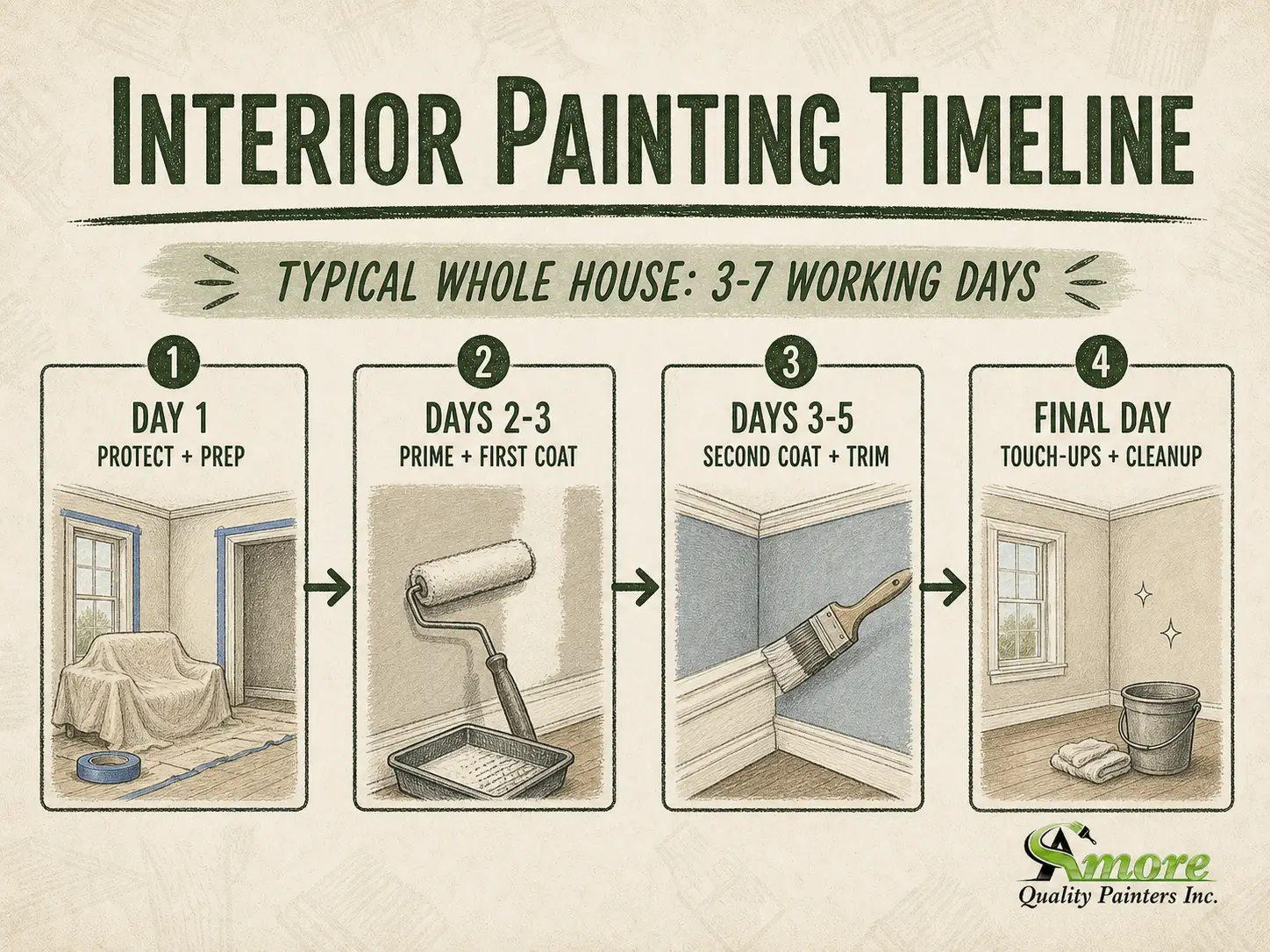
A typical whole-house interior painting project takes three to seven days for a professional crew. Empty homes with simple walls can move faster. Occupied homes with many colors, closets, doors, and detailed trim tend to take longer.
The crew may finish rooms in stages so the entire house is not disrupted at once. Bedrooms can be completed first, then common areas. Kitchens and bathrooms often require more coordination because people still need to use them.
Ceilings add time, especially when they have stains, repairs, or a strong color change. Trim adds another step because baseboards, door casings, and windows are usually painted separately from the walls. If every surface is changing color, the job is much closer to a full repaint than a quick wall refresh.
For a 2,000-square-foot interior in average condition, three to six working days is a reasonable starting estimate for a crew. It may be shorter in an empty house with minimal prep or longer if there are high ceilings, damaged surfaces, extensive trim, or several colors.
Exterior house painting timeline
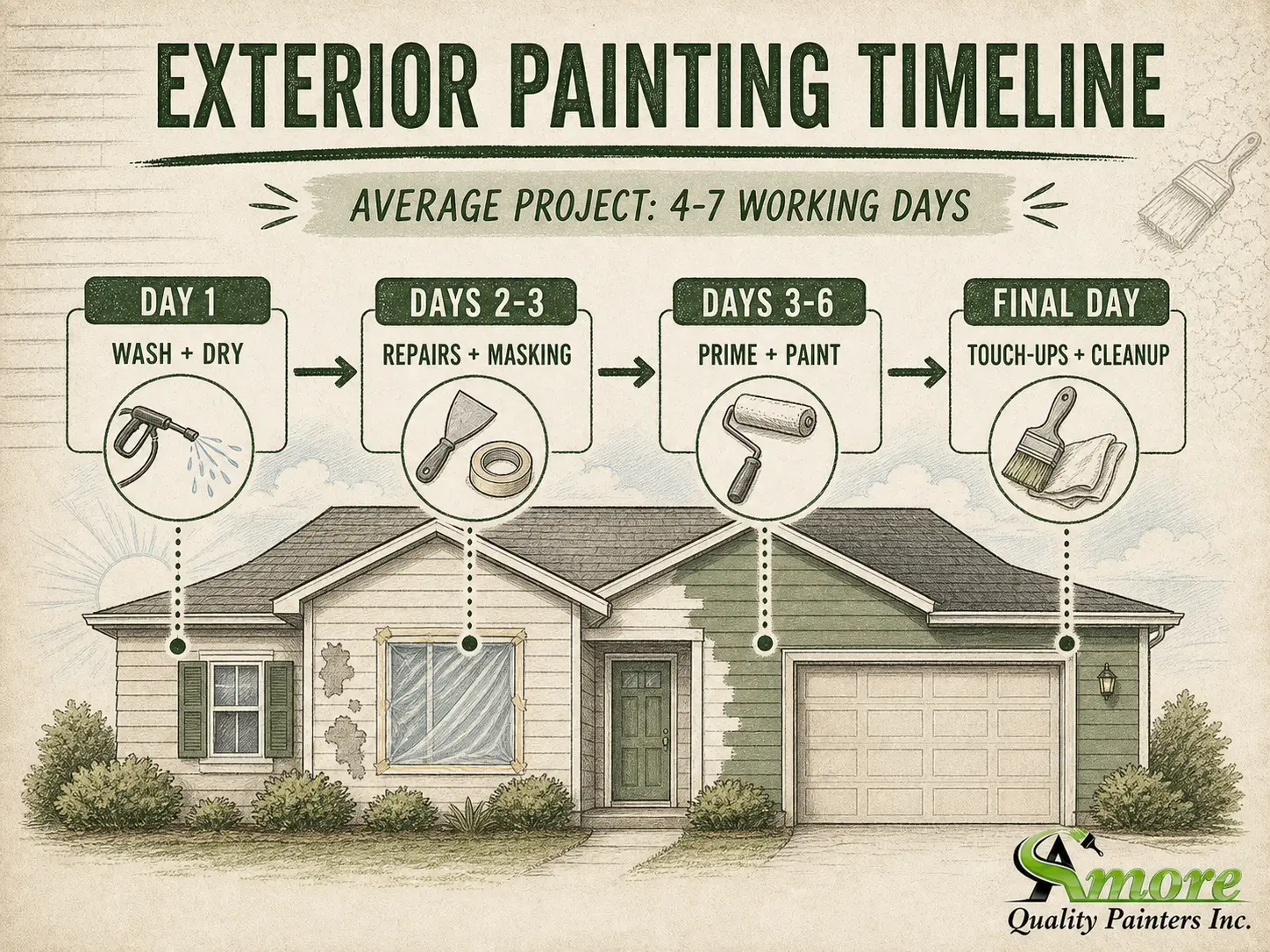
Most professional exterior painting projects take around four to seven working days. A larger home, difficult access, or a lot of peeling paint can push the schedule past a week.
Exterior work is more exposed to delays. Surfaces may need washing and enough time to dry before paint is applied. Stucco cracks, failed caulk, dry wood, and peeling sections have to be addressed. Wind can make spraying or masking difficult, and damp mornings can delay the start of the workday.
Weather affects more than comfort. Paint has an approved application range, and cool or humid conditions can slow drying. Direct sun can also create trouble by heating a surface and making paint set too quickly. An experienced crew may work around the house during the day, following shade rather than painting one side from top to bottom regardless of conditions.
What can make a painting project take longer?
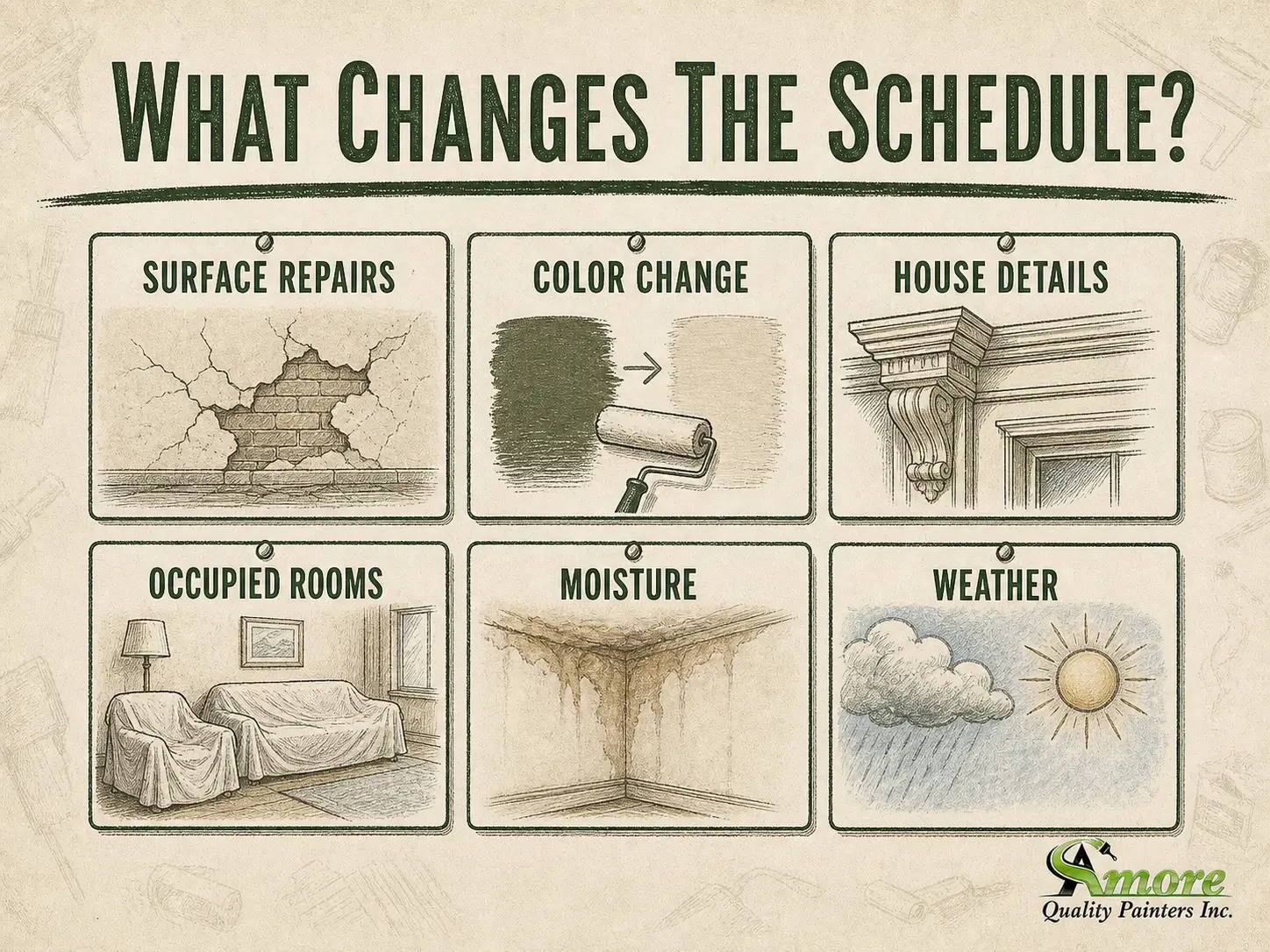
The surface needs more repair than expected
Peeling paint can hide soft wood. A stain may return after the first primer coat. Small stucco cracks can be more extensive once the surface is washed. Painters can plan for visible prep, but concealed damage sometimes appears after work begins.
The new color is a major change
Going from a dark navy wall to a soft white may need an extra coat or a specific primer. Bright reds, deep blues, and some yellows can also need more coverage than muted colors. Product choice matters here.
The house has a lot of detail
French doors, shutters, railings, built-in shelving, crown molding, and divided-light windows slow the pace. They create more edges to cut, mask, sand, and inspect.
The home stays occupied
Painters need room to work safely. If furniture must be moved from room to room or work has to stop around meetings, naps, pets, or school pickup, the schedule grows. A practical room-by-room plan can keep the house livable without forcing the crew to reset the same area repeatedly.
The crew finds moisture
Paint should not be used to hide an active leak or damp surface. The source needs attention first, and the area needs time to dry. Otherwise, the new coating may bubble, stain, or peel.
How to keep the job on schedule
Pick colors before the start date if possible. Late color changes can hold up material orders and turn finished walls into redo work. If you want samples, test them early and look at them in morning and evening light.
Clear small objects, clothing, and valuables from work areas. You do not have to empty every room unless the painter asks, but open floors and accessible walls help. Make plans for pets, share gate or alarm instructions, and point out anything delicate before setup begins.
Ask for a rough day-by-day sequence. You should know which rooms or elevations come first, when you may need to move furniture, and how weather delays will be handled. Our painting process page shows how we organize a project from the first estimate through the final walkthrough.
FAQ
Can a house be painted in one day?
A small, empty space with walls in good condition may be finished in one day. A whole house usually cannot be prepped, painted properly, allowed to dry, and inspected in that time. One-day promises often leave out ceilings, trim, repairs, or a second coat.
How long does it take to paint a 2,000-square-foot house?
An average 2,000-square-foot interior may take a professional crew about three to six working days. An exterior of similar size often takes four to seven days. Surface condition, height, layout, colors, and crew size can move either range.
How long does it take to paint a house interior?
Plan on roughly three to seven days for a whole-house interior in average condition. A few rooms may take two to five days. Ceilings, trim, repairs, and an occupied home add time.
How long does it take to paint a house exterior?
Four to seven working days is common for an average exterior. Homes with failing paint, extensive stucco or wood repair, difficult rooflines, or weather interruptions may take one to two weeks.
Do I need to leave home while the interior is painted?
Usually not. Many homeowners stay home while painters work through the house in sections. You may want to sleep elsewhere if bedrooms are unavailable, you are sensitive to odors, or the scope makes normal access difficult. Talk through the sequence before work starts.
When can furniture go back after painting?
Furniture can often return once the room is dry and the crew removes its protection, but keep it from rubbing against freshly painted walls. Paint can feel dry before it reaches full hardness. Follow the product’s stated cure time before scrubbing the surface or putting it under heavy wear.
Final thoughts
So, how long does it take to paint a house? Think in working days rather than hours. Prep, repairs, detail work, and weather are the usual reasons a job moves outside the planning ranges above.
A useful estimate should include both price and timing. At Amore Painters, we walk the property, look at the condition of the surfaces, and explain what will affect the schedule before work starts. If you are planning a repaint in the Tri-Valley, East Bay, or South Bay, you can request a free painting estimate and get a timeline based on your actual home.