Most latex or water-based paint needs about 2 to 4 hours before the second coat, but the label on the paint can wins every time. Some paints are ready faster. Some need longer. Oil-based paints, cabinet coatings, primers, exterior paints, humid weather, cold rooms, and thick coats can all mess with the timeline.
Annoying? A little. Important? Very.
The short version: if the first coat still feels tacky, soft, cool, gummy, or like it might fight back, do not paint over it yet. That second coat is not going to rescue the first one. It is going to trap the problem underneath and make the finish look weird.
If you’re planning a bigger paint project, our interior painting team can help with timing, prep, paint selection, and the part nobody loves: making sure the finish actually holds up.
How long should you wait before the second coat of paint?
For many interior wall paints, the wait time between coats is usually around 2 to 4 hours. Sherwin-Williams says to let the first coat dry completely before the next coat and notes that 2 to 4 hours is typical, while still checking the paint label.
That last part matters. A lot.
Paint cans are not just decorated buckets. The label or technical data sheet tells you the actual recoat time for that product, under normal conditions. For example, Benjamin Moore’s Ben Interior Paint lists a 1 hour dry time and 2 hour recoat time for its matte interior paint.
But not every paint works that way. Some primers and specialty coatings need 8 hours or more before recoating. Some floor paints need longer. Some cabinet products need overnight drying.
So the real answer is:
| Paint type or surface | Typical wait before second coat |
|---|---|
| Interior latex wall paint | 2 to 4 hours |
| Interior acrylic paint | 2 to 4 hours |
| Primer | 1 to 8 hours, depending on product |
| Oil-based paint | Often 16 to 24 hours |
| Cabinet paint | Often longer than wall paint |
| Exterior paint | Usually 4 hours or more, depending on weather |
| Porch or floor paint | Often 8 hours or more |
If that table feels like a lot of “it depends,” that’s because paint is dramatic. Quietly dramatic, but still.
Paint drying time between coats is not one-size-fits-all
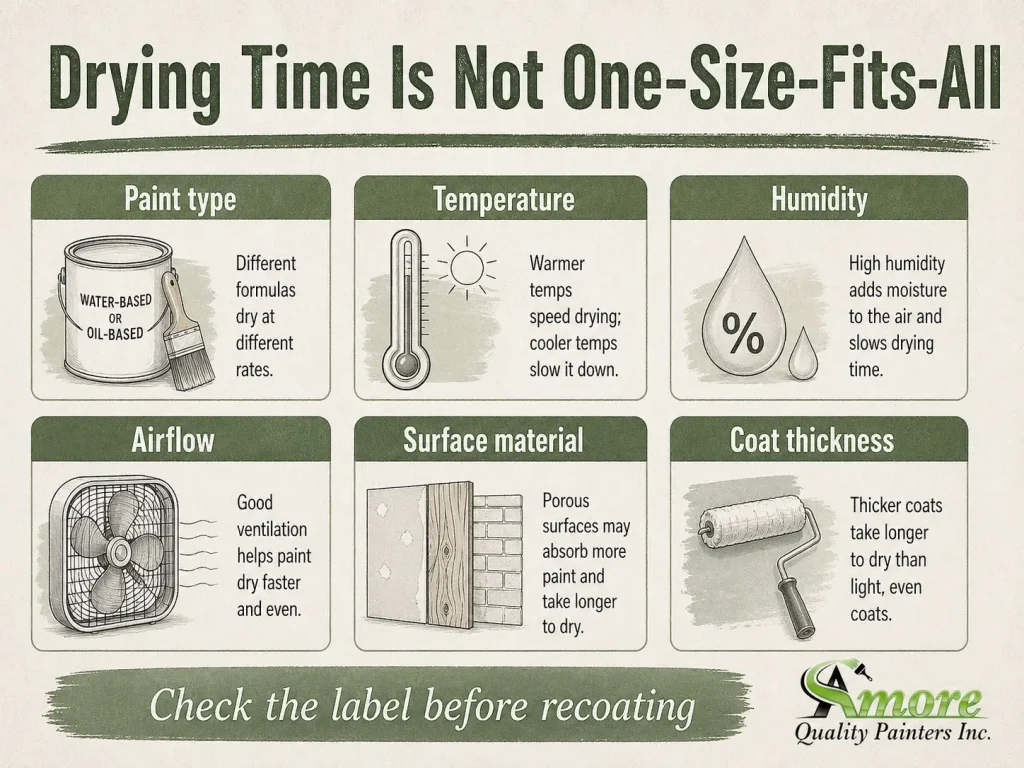
Paint drying time between coats depends on what you’re painting, what product you’re using, and what the air is doing that day.
A thin coat on a bedroom wall in a comfortable, dry room may be ready pretty quickly. A thick coat in a humid bathroom? That paint is going to take its sweet time.
The biggest factors are:
- Paint type
- Temperature
- Humidity
- Airflow
- Surface material
- Coat thickness
- Color depth
- Primer use
- Whether you’re painting inside or outside
PPG’s Ultra-Hide 250 technical data sheet lists dry-to-touch time at 1 hour, recoat time at 4 hours, and full cure at 30 days. It also notes that drying times can vary depending on temperature, humidity, film build, color, and air movement.
That is the part homeowners often miss. Paint does not dry on your schedule. It dries when the surface, air, and coating are ready.
Rude, but fair.
How long between coats of paint for interior walls?
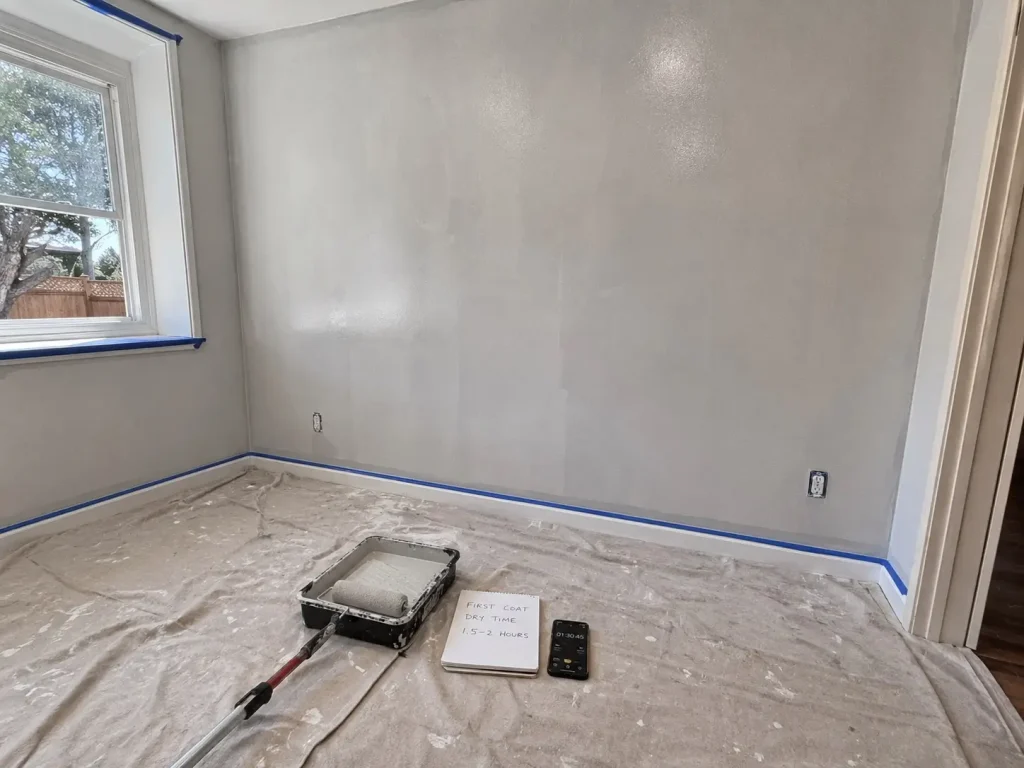
For most interior walls, wait 2 to 4 hours between coats of paint if you’re using a standard latex or acrylic wall paint.
But before you roll on the second coat, check three things:
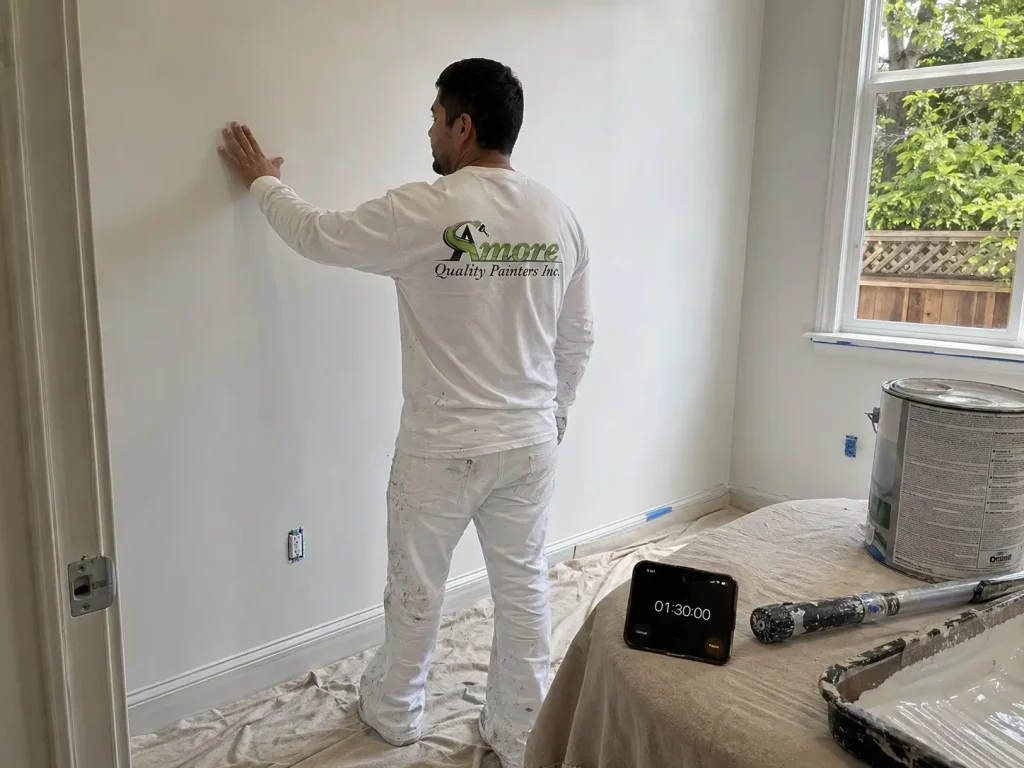
First, touch the wall lightly in an out-of-the-way spot. It should feel dry, not tacky.
Second, look at the sheen. If some areas still look wet or darker than others, wait.
Third, think about the room. If it’s cold, humid, or poorly ventilated, give it more time.
Interior walls usually dry faster than trim, cabinets, doors, or exterior surfaces because the paint film is often thinner and the environment is easier to control. Bedrooms, living rooms, dining rooms, and hallways are usually pretty straightforward.
Bathrooms and kitchens are different. Steam, humidity, grease, and slick surfaces can slow things down or make prep more important.
If you’re refreshing more than one room, our guide to whole house interior painting cost can help you plan the bigger picture before you start moving furniture around like you’re training for a very boring obstacle course.
How long does interior paint take to dry?
Interior paint often dries to the touch in about 1 hour, but that does not always mean it is ready for another coat.
This is where people get tricked.
“Dry to touch” means you can lightly touch the surface without paint coming off on your finger. Nice. Helpful. Not the whole story.
“Ready to recoat” means the first coat is dry enough to accept the second coat without lifting, dragging, peeling, wrinkling, or turning into a streaky little disaster.
Those are different milestones.
Here’s a simple breakdown:
| Stage | What it means |
|---|---|
| Dry to touch | You can touch it lightly without paint transferring |
| Ready to recoat | You can safely apply the next coat |
| Fully cured | The paint has hardened enough for normal durability and cleaning |
A wall can feel dry and still not be ready for abuse. So don’t press tape on it, scrub it, hang heavy decor, or shove furniture against it right away. Let it toughen up first.
How long does exterior paint take to dry?
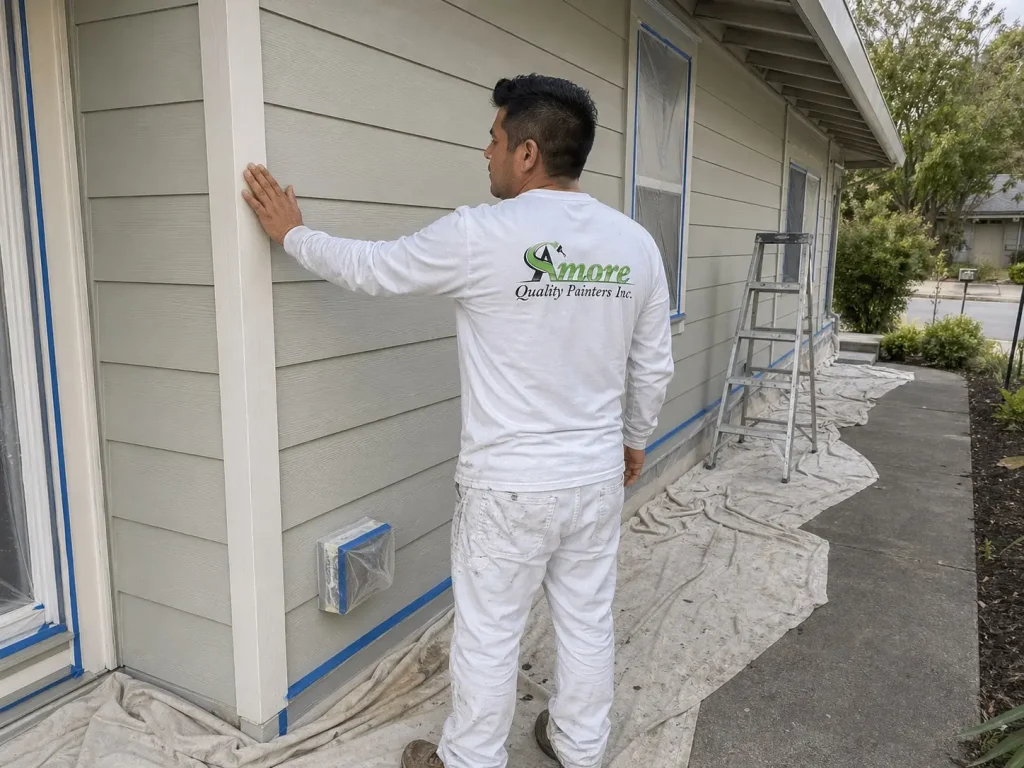
Exterior paint usually takes longer to manage because the weather gets a vote.
Sun, shade, wind, fog, humidity, cold mornings, hot afternoons, and surprise Bay Area mood swings can all affect drying. A wall that dries quickly in direct sun may dry slowly on the shaded side of the house. Fresh paint can also skin over too fast in heat, which sounds helpful but is not always great for the final finish.
For many exterior acrylic paints, recoat time may be around 4 hours under good conditions, but the label is still the boss. If the product says 4 hours, and the weather is cool or damp, waiting longer is safer.
Exterior painting also gets more complicated when surfaces are chalky, sun-beaten, cracked, peeling, or previously painted with a coating that is failing. In those cases, prep matters more than speed.
Our exterior painting service focuses on surface prep, weather timing, and coatings that make sense for Bay Area homes, because painting outside is not just “walls, but outdoors.”
Paint curing time vs drying time
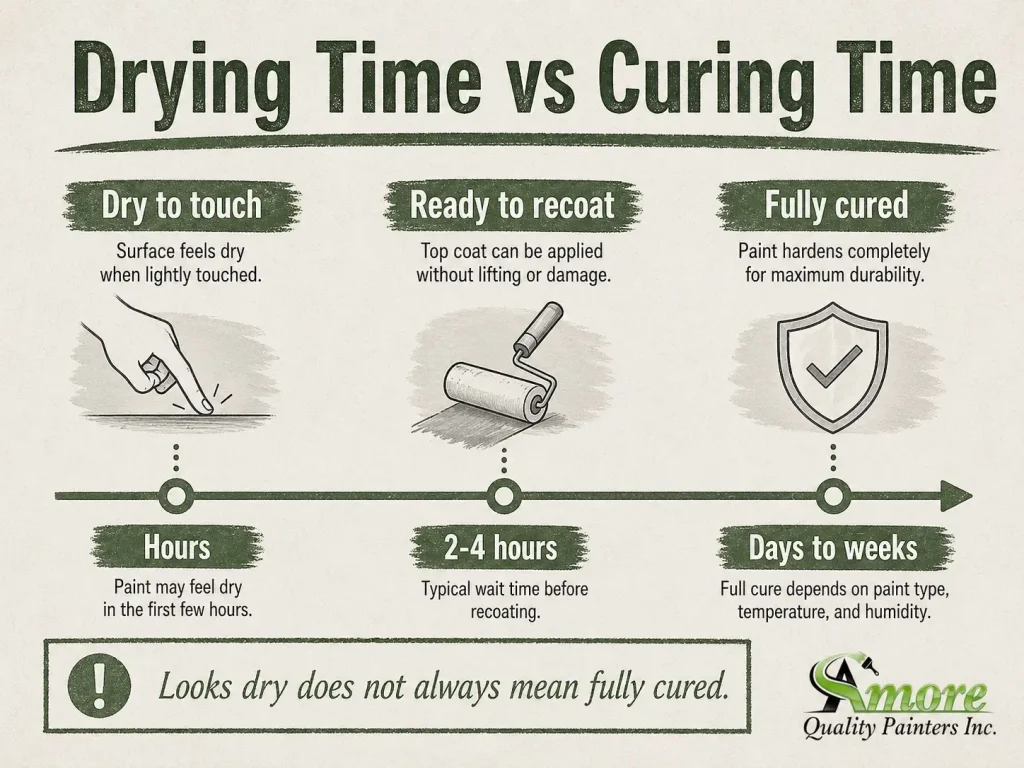
Paint drying time vs curing time is the part that saves a lot of headaches once you understand it.
Drying is when the paint no longer feels wet.
Curing is when the paint has hardened enough to reach its intended durability.
Paint can dry in hours and cure over days or weeks. PPG’s Ultra-Hide 250 data sheet lists full cure at 30 days and says to wait at least 30 days before cleaning the painted surface with a mild cleaner.
That means a newly painted wall may look finished long before it is ready for scrubbing. This is why fresh paint sometimes scuffs, dents, or marks more easily in the first couple of weeks.
So yes, the room can look done. The paint, however, may still be getting its life together.
During the curing window, be gentle with:
- Cleaning
- Tape
- Furniture rubbing against walls
- Cabinet doors
- Trim
- Doors and door frames
- Heavy moisture
- Sticky hands, tiny humans included
Especially tiny humans.
What happens if you paint the second coat too soon?
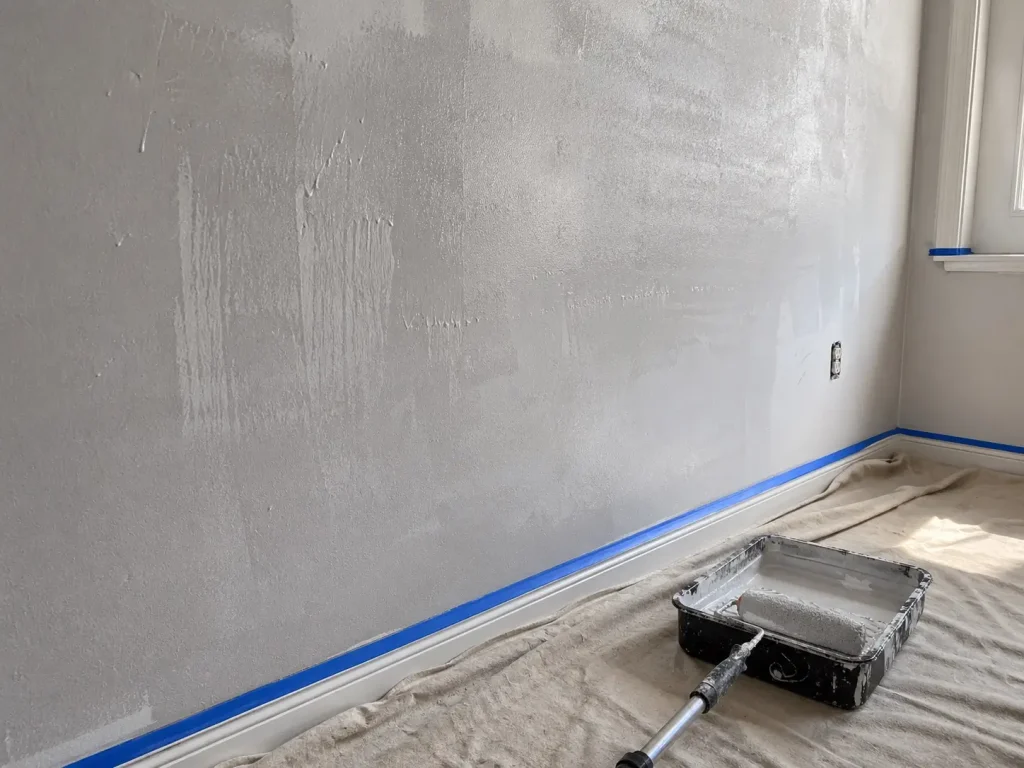
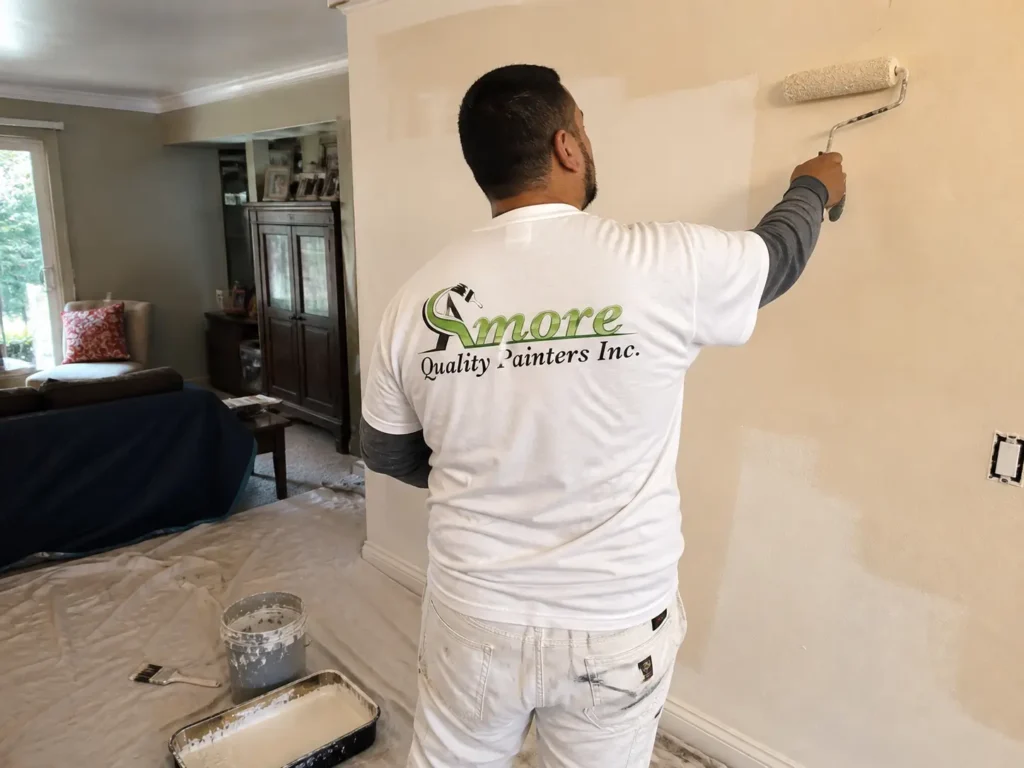
If you paint the second coat too soon, you can end up with streaks, peeling, tackiness, bubbles, roller marks, or uneven sheen.
The second coat can pull at the first coat if it has not dried enough. Instead of building a clean finish, the roller starts dragging the half-dry layer underneath. That’s when the wall gets that rough, patchy, “why does this look worse than before?” texture.
Common problems include:
- Paint lifting
- Uneven color
- Sticky or gummy finish
- Visible roller lines
- Blotchy sheen
- Peeling later
- Longer cure time
- A finish that marks easily
Basically, rushing the second coat can turn a normal paint job into a repair project. Not ideal. Not fun. Not what anyone meant by “weekend project.”
Can you wait too long between coats of paint?
Usually, waiting longer is fine. Overnight is often totally okay for many interior wall paints.
The only catch is keeping the surface clean. If dust, pet hair, cooking grease, or outdoor debris lands on the first coat before the second coat goes on, you may need to lightly clean or dust the surface before continuing.
For most home projects, waiting a little longer is safer than rushing.
So if you’re choosing between “maybe too soon” and “I’ll do it tomorrow,” tomorrow often wins.
How to help paint dry properly
You do not need to baby the paint, but you also should not make its life harder.
A few things help:
- Keep the room at a comfortable temperature
- Use fans for airflow, but don’t blast dust onto wet paint
- Open windows when weather and air quality allow
- Keep humidity down
- Apply thin, even coats
- Follow the product label
- Avoid painting in cold, damp conditions
- Give trim, cabinets, and doors extra time
The big one is thin coats. Thick paint does not mean better coverage. It usually means longer dry time, more texture, and a higher chance of weirdness.
Two clean coats beat one gloopy coat almost every time.
Surfaces that need extra patience
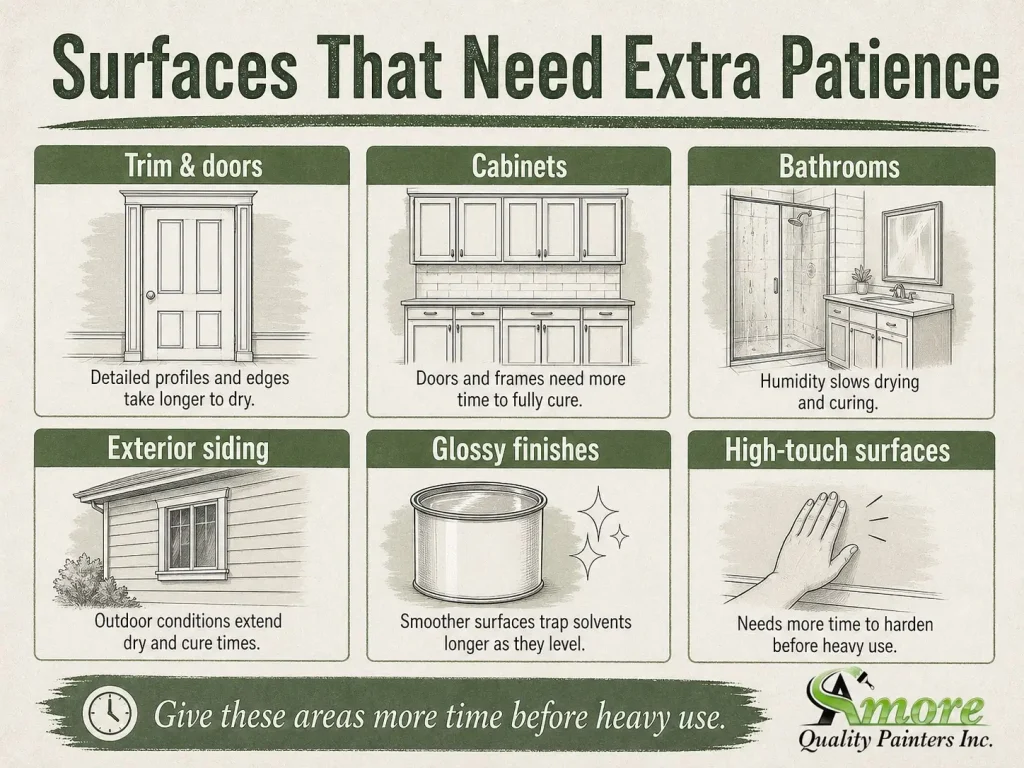
Walls are usually forgiving. Other surfaces? Less so.
Trim and doors
Trim and doors get touched constantly, so they need time. Semi-gloss and gloss finishes may stay tacky longer than wall paint, especially if applied too thick.
Do not close freshly painted doors too soon unless you enjoy peeling them open later. Nobody needs that tiny heartbreak.
Cabinets
Cabinets need even more patience. They get grabbed, wiped, bumped, slammed, and exposed to grease. Cabinet coatings also often have longer dry and cure windows than regular wall paint.
If you’re wondering whether cabinet painting makes sense at all, our guide on whether you should paint your kitchen cabinets or replace them walks through painting, refinishing, refacing, and replacement without making it weird.
Bathrooms
Bathrooms are humid, so paint can take longer to dry and cure. Wait before running long hot showers if the room was just painted. The paint may look ready, but steam is not exactly a gentle welcome party.
Exterior siding and trim
Exterior surfaces need the right weather window. Cool, damp mornings and late-day fog can slow drying. Direct sun can create its own problems too. Timing matters outside.
When a second coat is actually needed
Most paint jobs look better with two coats. One coat can work in some situations, but it depends on the product, color, surface, and expectations.
You probably need a second coat if:
- The old color is showing through
- The sheen looks uneven
- The wall looks patchy
- You changed colors dramatically
- You painted over repairs or primer
- The surface is porous
- The first coat looks thin
- The product recommends two coats
Some premium paints advertise strong coverage, but even then, two coats often give a better, more even finish. Especially when light hits the wall at an angle and suddenly reveals every lazy spot. Paint has a way of humbling people.
How to know the first coat is ready
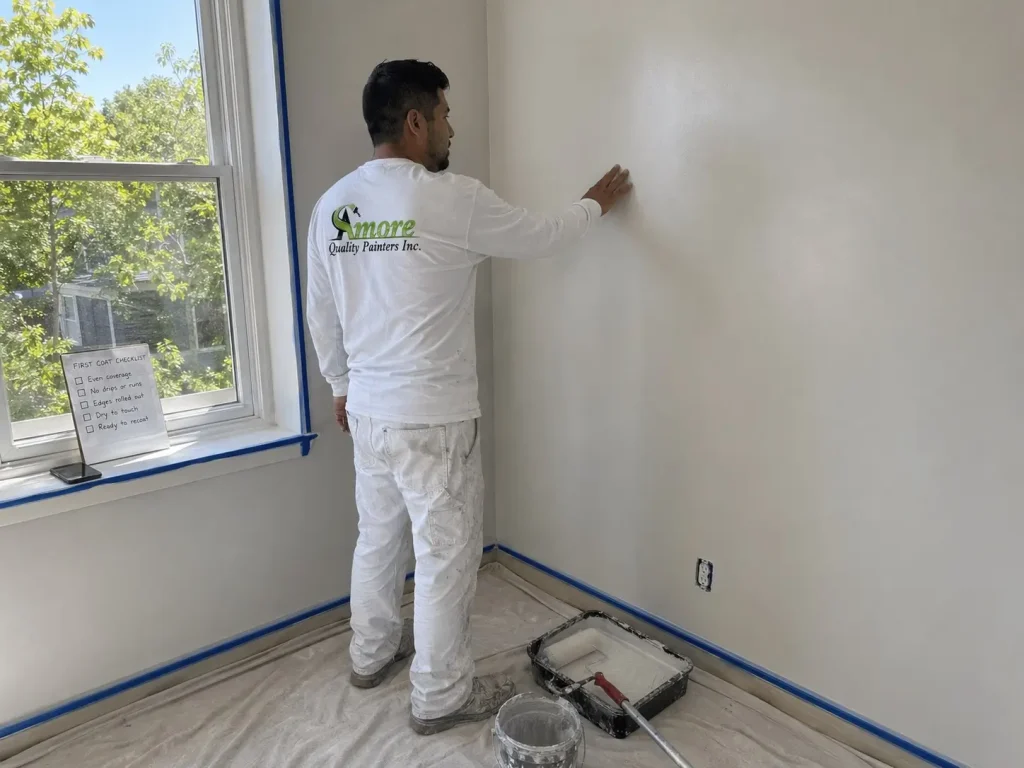
Use this quick check before applying the second coat:
- The surface feels dry, not tacky
- The color looks even, not wet or blotchy
- The paint does not lift when lightly touched
- The room has had enough airflow
- The label’s recoat time has passed
- The temperature and humidity are reasonable
If you’re not sure, wait longer.
That’s not fancy advice, but it is good advice. Paint problems are much easier to avoid than fix.
Want help timing the project?
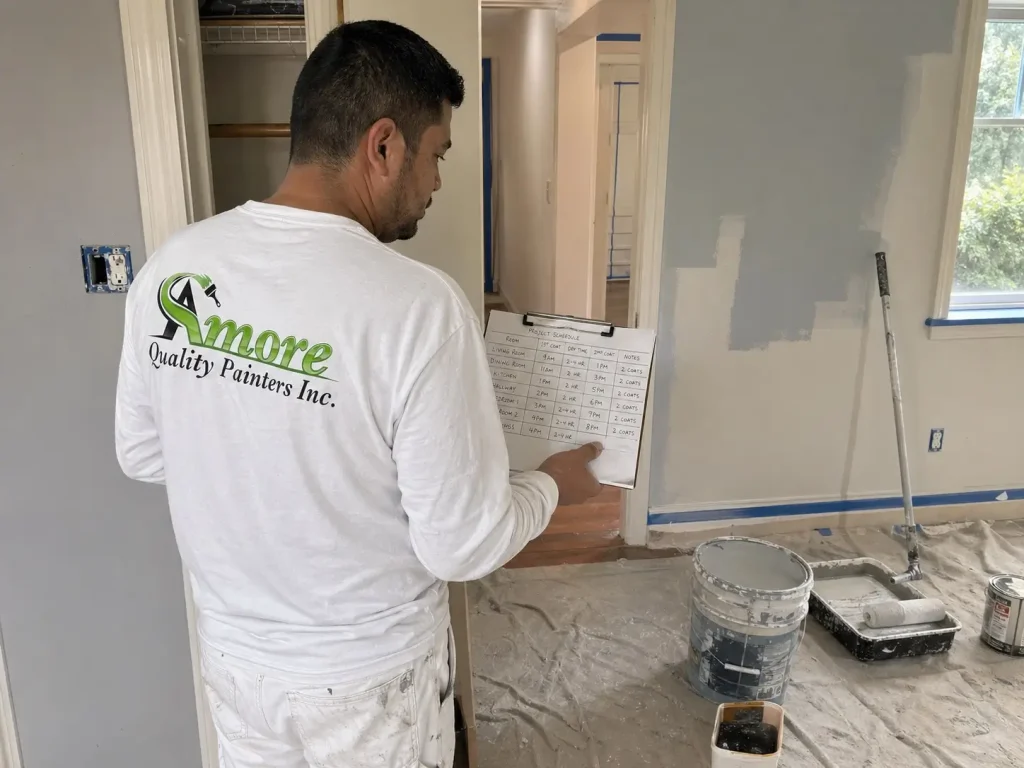
If you’re painting one small room, you can probably manage the timing with the label, a fan, and a little patience.
If you’re painting several rooms, trim, cabinets, or the exterior, timing gets harder. You have drying windows, prep stages, furniture, pets, weather, and the classic question: “Can we sleep in this room tonight or no?”
If you want the job planned around the right dry times, recoat windows, and finish schedule, our painting team can take a look at the project and give you a clear plan before paint goes on the wall.
FAQ
How long before second coat of paint?
For many latex or water-based interior wall paints, wait about 2 to 4 hours before applying the second coat. Always check the label because primers, oil-based paints, cabinet coatings, floor paints, and exterior paints may need longer.
What is the normal paint drying time between coats?
Paint drying time between coats is often 2 to 4 hours for interior latex paint. Some products are ready sooner, while specialty coatings may need 8, 16, or even 24 hours.
How long between coats of paint for walls?
For most interior walls, wait 2 to 4 hours between coats of paint. If the room is humid, cold, poorly ventilated, or the first coat was applied thick, wait longer.
How long does interior paint take to dry?
Interior paint may dry to the touch in about 1 hour, but it may not be ready for a second coat until 2 to 4 hours or longer, depending on the product and room conditions.
How long does exterior paint take to dry?
Exterior paint often needs at least 4 hours before recoating, but weather can stretch that timeline. Cool temperatures, humidity, shade, and damp surfaces can all slow drying.
What is the difference between paint curing time vs drying time?
Drying means the paint no longer feels wet. Curing means the paint has hardened enough for normal durability. Some paints dry in hours but take up to 30 days to fully cure.
Can I apply a second coat after 1 hour?
Sometimes, but only if the paint product says it is ready for recoat after 1 hour. Many interior wall paints need 2 to 4 hours. If the first coat still feels tacky, wait.
What happens if I paint the second coat too soon?
The second coat can pull, streak, bubble, wrinkle, or trap moisture in the first coat. The finish may look uneven or stay soft longer than it should.
Final thoughts
So, how long before second coat of paint?
For most interior walls, 2 to 4 hours is the usual wait. For exterior paint, trim, doors, cabinets, primers, and specialty coatings, it may be longer. The safest move is simple: read the label, check the surface, and don’t rush a coat that still feels tacky.
Paint is weirdly patient. It rewards you for waiting and punishes you for thinking, “Eh, it’s probably fine.”
If you’re planning a bigger interior or exterior paint project and want the timing handled correctly, our interior painting team can help you choose the right products, schedule the coats, and avoid the fun little disasters that happen when paint gets rushed.