If you’re staring at your kitchen thinking, “These cabinets are technically fine, but I hate looking at them,” painting might be the move.
The big question is not really “Should I paint my kitchen cabinets?” It is more like, “Are my cabinets good enough to keep, or am I trying to make tired cabinets pretend they’re new?”
That’s the line. If the cabinet boxes are solid, the layout works, and you mostly hate the color or finish, painting can make a kitchen feel completely different without tearing the whole room apart. If the cabinets are warped, crumbling, water-damaged, or poorly built, paint will not save them. It’ll just make the problems look cleaner for a little while.
For Bay Area homeowners who want the kitchen refreshed without a full remodel, our cabinet painting and refinishing service is built around prep, sanding, surface repair, and smooth finish work.
Is painting kitchen cabinets worth it?
Painting kitchen cabinets is worth it when your cabinets are structurally sound but visually outdated.
That usually means the doors open and close well, the cabinet boxes are sturdy, the shelves are not sagging, and you’re happy with the layout. Maybe the color is dated. Maybe the wood tone feels heavy. Maybe the old finish has seen one too many years of cooking grease and fingerprints. Normal kitchen stuff.
Paint is especially useful when you want a cleaner look, but you do not want to pay for new cabinets, new counters, plumbing changes, backsplash repairs, and all the other surprise guests that show up during a kitchen remodel.
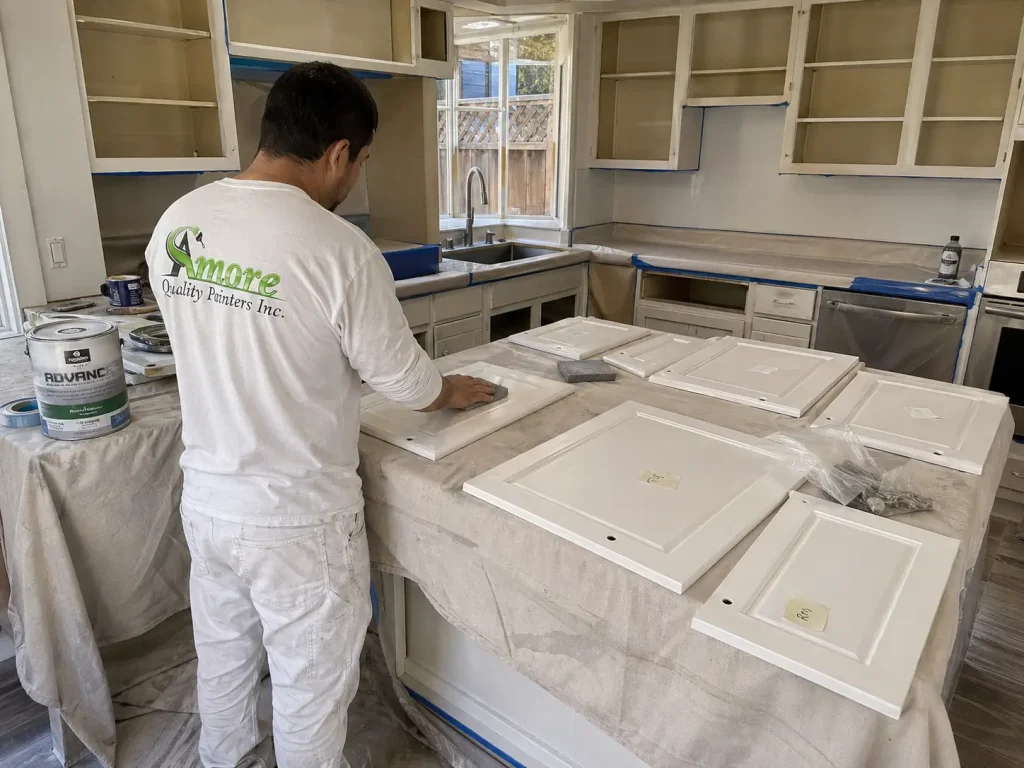
Kitchen cabinet painting takes real prep, though. It is not the same as rolling paint onto a bedroom wall. Cabinet surfaces need cleaning, sanding, priming, and careful coating. Both Benjamin Moore’s cabinet painting guide and Sherwin-Williams’ cabinet painting steps call out sanding, priming, and sanding again as part of the process before finish coats go on.
So yes, painting can be worth it. But only if the work is done correctly.
When painting your kitchen cabinets makes sense
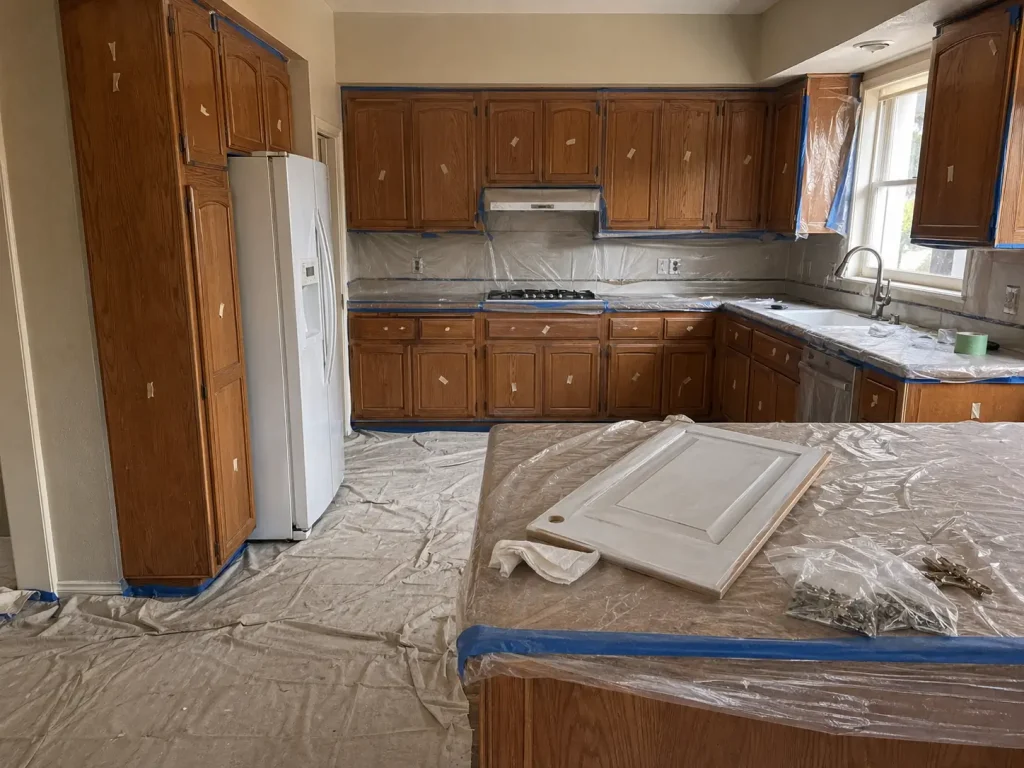
Painting is a strong option when the bones are good and the look is the problem.
You’re probably a good candidate if:
- The cabinet boxes are solid
- Doors and drawers work properly
- You like the current kitchen layout
- The cabinet style still fits your home
- The damage is mostly cosmetic
- You want a fresh look without a full remodel
- You’re planning to update walls, counters, backsplash, or hardware too
A lot of kitchens fall into this category. Nothing is broken. Nothing is falling off the wall. It just looks dated. Paint is great for that.
It can also help if you’re already planning a bigger interior refresh. If the cabinets are going from dark brown to soft white, greige, sage, navy, or another cleaner color, the whole kitchen can feel brighter fast.
And if you’re painting more than the cabinets, our guide to whole house interior painting cost can help you budget for walls, trim, and other rooms too.
When not to paint kitchen cabinets
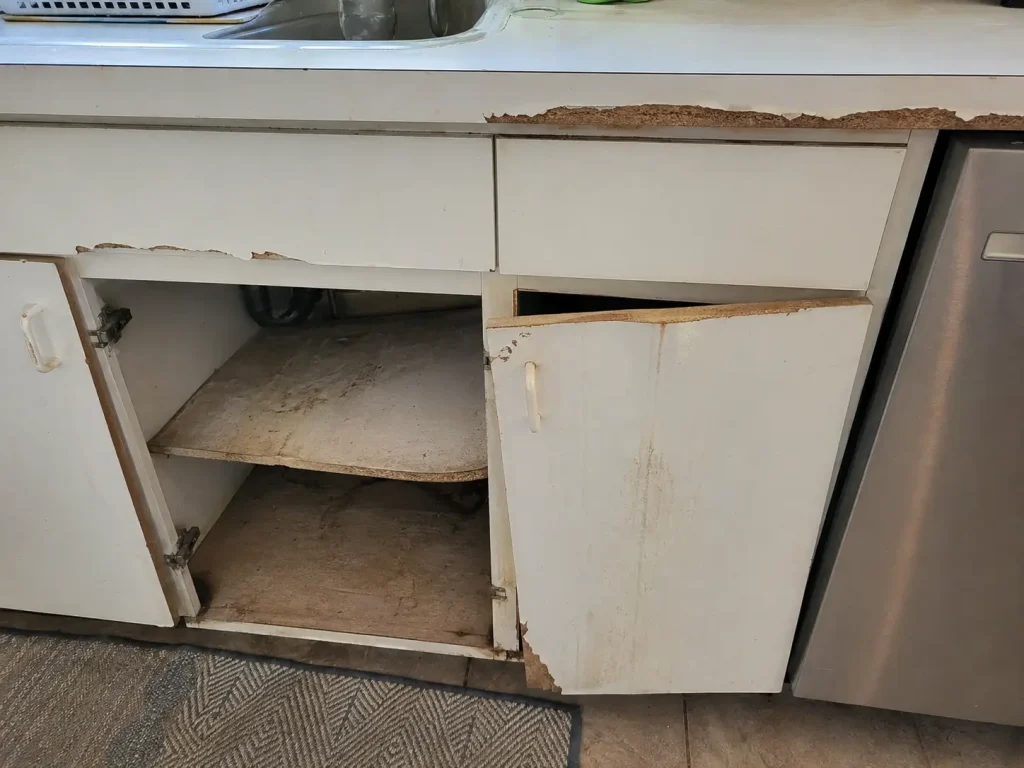
There are times when painting cabinets is the wrong call. Annoying, but true.
Do not paint your cabinets if the cabinet boxes are falling apart. Paint will not fix swelling, soft wood, broken frames, bad hinges, mold issues, or doors that no longer fit properly.
Painting is also not the best choice if you hate the layout. If you want to move appliances, add storage, change cabinet heights, remove awkward corners, or completely redesign the kitchen, replacement probably makes more sense.
Paint changes the finish. It does not change the structure.
You may want to replace kitchen cabinets if:
- The boxes are water-damaged
- Particleboard is swollen or crumbling
- Shelves are sagging badly
- Doors are warped
- The layout does not work
- You need more storage
- The cabinets were poorly built
- You’re already doing a full kitchen remodel
A fresh coat of paint on bad cabinets is like putting a nice shirt on a chair with one broken leg. Better looking, still a problem.
Paint vs replace kitchen cabinets
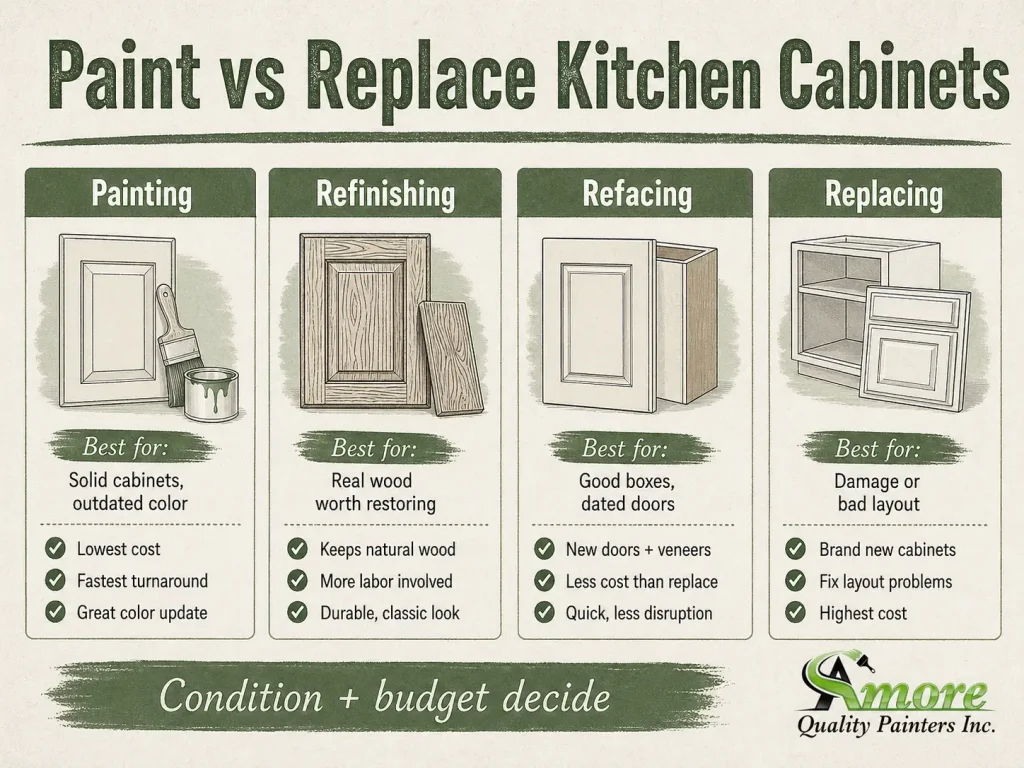
Paint vs replace kitchen cabinets is usually a budget and condition decision.
Painting keeps your existing boxes and doors, then changes the surface color and finish. Replacing removes the cabinets and installs new ones. That can also affect countertops, backsplash, flooring, plumbing, electrical, and appliances, which is why cabinet replacement can quickly become a larger kitchen remodel.
Here’s the simple version:
| Option | Best for | Main drawback |
|---|---|---|
| Painting | Solid cabinets with an outdated color | Does not change layout or door style |
| Refinishing | Real wood cabinets with a finish worth restoring | Limited if you want a totally new color |
| Refacing | Good cabinet boxes with outdated doors | Costs more than painting |
| Replacing | Damaged cabinets or bad layout | Highest cost and most disruption |
Replacement is the cleanest fix when the cabinets are actually failing. Painting is the cleaner choice when you’re tired of the look, not the function.
Cabinet painting vs refacing
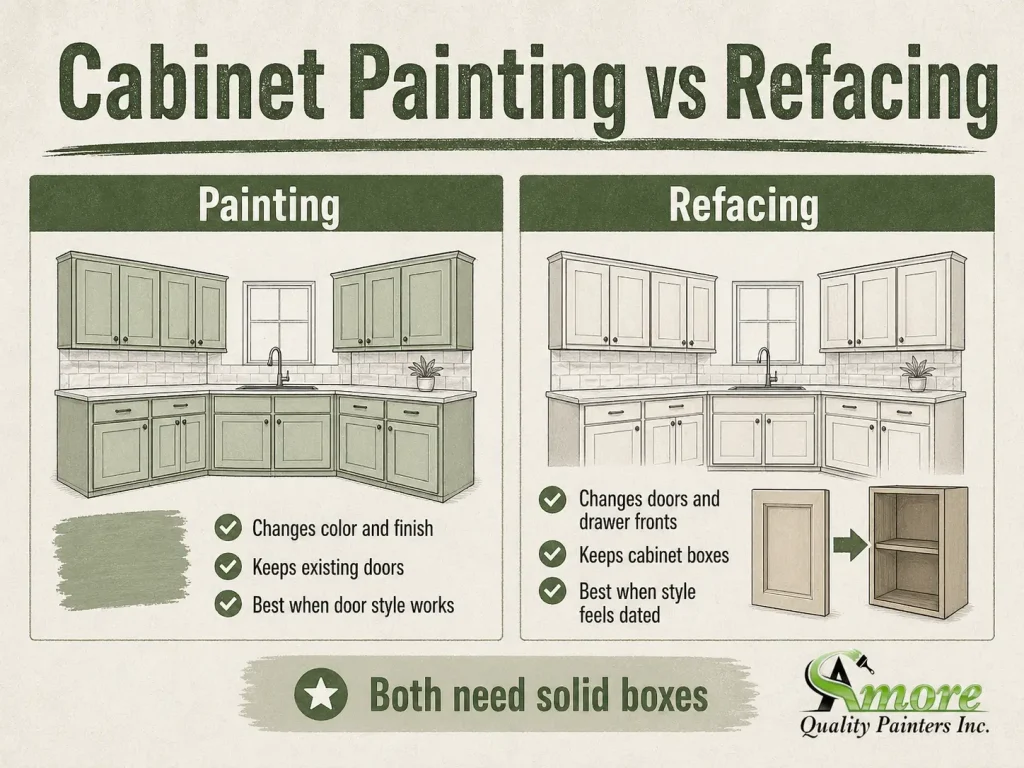
Cabinet painting vs refacing comes down to how much you want to change.
Painting changes the color and finish of the existing cabinet doors, drawer fronts, and boxes. Refacing usually keeps the cabinet boxes but replaces the doors and drawer fronts, then covers visible cabinet box surfaces with veneer or laminate.
Refacing can give the kitchen a more dramatic style update because you can change the door profile. Flat old doors can become Shaker doors. Raised panel doors can become something cleaner. That’s a bigger change than paint alone.
But refacing is also more involved. The Spruce’s cabinet refacing guide describes refacing as keeping the cabinet boxes while replacing doors and drawer fronts, then applying veneer or laminate to visible areas. It also lists refacing as a middle option between repainting and full replacement.
Painting is usually best when you still like the door style. Refacing is better when the cabinet boxes are fine, but the door style feels dated no matter what color you choose.
Kitchen cabinet refacing pros and cons
Kitchen cabinet refacing has its place. It is just not automatically better than painting.
| Refacing pros | Refacing cons |
|---|---|
| Changes the cabinet door style | Costs more than painting |
| Keeps existing cabinet boxes | Does not fix a bad layout |
| Less disruptive than replacement | Does not solve structural damage |
| Can look closer to new cabinets | Veneer work needs skill |
| More design change than paint | Still depends on existing boxes |
Refacing makes sense when the cabinet boxes are solid, the layout works, and the doors are the main issue.
Painting makes sense when the door style is acceptable and the finish is the main issue.
Replacing makes sense when the structure, storage, or layout is the issue.
Tiny difference in wording. Big difference in price.
Cabinet refinishing vs painting
Cabinet refinishing vs painting depends on what finish you want.
Refinishing usually means keeping or restoring the wood look. The old finish may be stripped, sanded, stained, sealed, or clear-coated. This is best for real wood cabinets where the grain is part of the charm.
Painting covers the wood grain with a solid color. It is best when you want a cleaner, more modern look or when the existing wood tone no longer fits the kitchen.
Refinishing works well for:
- Solid wood cabinets
- Stained wood finishes
- Natural wood looks
- Cabinets with attractive grain
- Homes where the wood style still fits
Painting works well for:
- Outdated orange or dark wood tones
- Mixed finishes that need to feel more consistent
- Modern color updates
- Cabinets with cosmetic wear
- Kitchens that need a brighter look
Some cabinets can be painted beautifully. Some deserve to stay wood. Some are made from materials that need extra care before any finish goes on. That is why the first step is always checking what the cabinets are actually made of.
Cost to paint kitchen cabinets
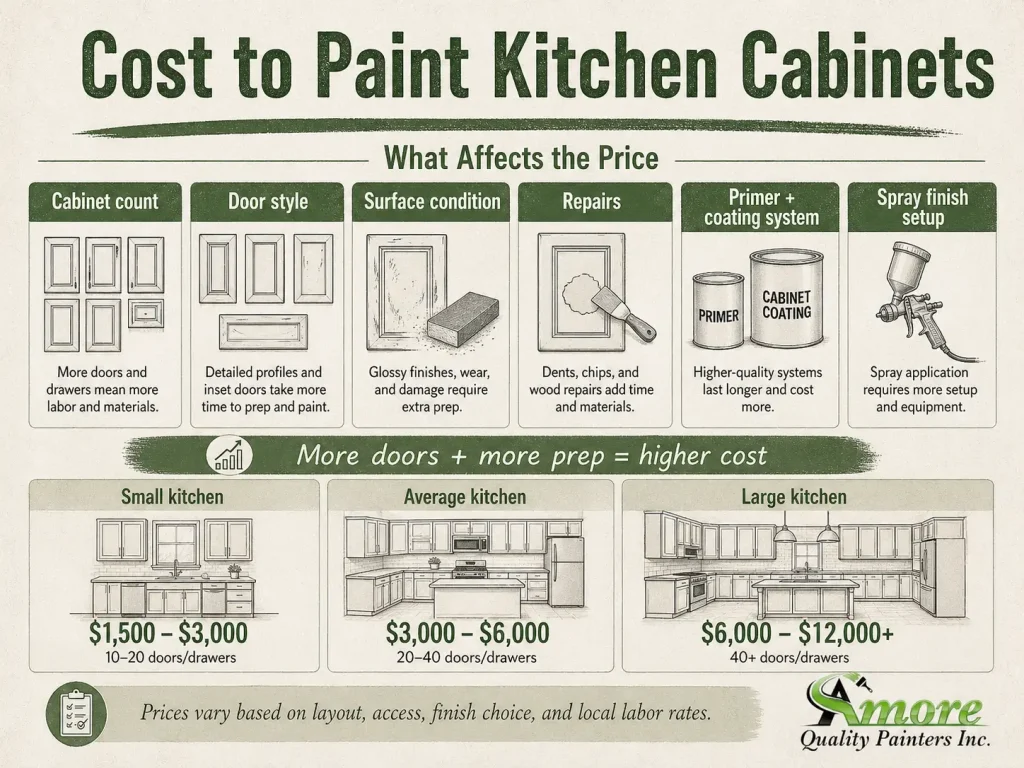
The cost to paint kitchen cabinets depends on kitchen size, cabinet count, door style, surface condition, paint system, finish method, and whether repairs are needed.
National cost guides vary because cabinet painting projects vary a lot. Angi’s 2026 cabinet painting cost guide lists professional cabinet painting at $425 to $1,465 for many projects, with an average around $940. Thumbtack’s cabinet painting cost data lists a national average range around $1,390 to $3,353, with many homeowners paying around $2,164. Higher-end professional cabinet finishing can cost more, especially when there are many doors, detailed profiles, grain filling, spraying, repairs, or premium coatings involved.
If you want a real number for your kitchen, we can take a look at the cabinet boxes, doors, drawers, finish, and wear before giving you a price. Our cabinet painting and refinishing team can help you see whether painting is worth it or whether refinishing, refacing, or replacing would be the better use of your budget.
Here’s a practical planning view:
| Cabinet project | Typical cost behavior |
|---|---|
| Small vanity or built-in | Lower cost, fewer doors and drawers |
| Small kitchen | Less labor, simpler setup |
| Average kitchen | Mid-range pricing, depends on door count |
| Large kitchen | Higher labor and material cost |
| Detailed cabinet doors | More prep and coating time |
| Grain filling or heavy repairs | Adds labor |
| Spray finish | More setup, smoother finish |
The biggest thing to know: cabinet painting is labor-heavy. Cleaning, degreasing, sanding, labeling doors, protecting the kitchen, priming, coating, drying, and reinstalling all take time.
That is why a cheap cabinet paint job can get ugly fast. Cabinets are touched every day. If the prep is rushed, the finish usually tells on itself.
Pros and cons of painting kitchen cabinets
Painting kitchen cabinets has real upside. It also has limits.
| Pros | Cons |
|---|---|
| Costs less than full replacement | Does not fix layout problems |
| Gives the kitchen a fresh look | Prep has to be done carefully |
| Less disruptive than remodeling | Painted finishes can chip if abused |
| Many color options | Not ideal for badly damaged cabinets |
| Works well with new hardware | Some materials need special prep |
| Can pair with wall and trim updates | Cure time matters |
The biggest pro is obvious: you can make the kitchen feel new without gutting it.
The biggest con is also obvious: paint is not magic. It needs a good surface, the right products, and enough time to cure. Kitchen cabinets deal with grease, moisture, heat, dishes, hands, kids, pets, and the occasional drawer slam from someone pretending they are “not mad.”
Cabinet paint has a hard job.
How long does cabinet paint last?
A good cabinet paint job can last years, but the exact lifespan depends on prep, product quality, daily use, cleaning habits, and how rough the kitchen is.
A lightly used adult kitchen and a busy family kitchen are not the same environment. One gets coffee mugs and gentle wiping. The other gets backpacks, snack hands, steam, sauce splatter, and someone using a foot to close the trash pullout.
Proper prep makes the biggest difference. Cabinet surfaces need to be cleaned and sanded so the primer and paint can bond. Sherwin-Williams recommends sanding after primer dries, wiping away debris, then applying the first coat of cabinet paint. Benjamin Moore also includes cleaning, sanding, priming, and sanding again in its cabinet painting process.
You can help painted cabinets last longer by:
- Using cabinet-safe cleaners
- Avoiding harsh scrub pads
- Wiping grease before it builds up
- Letting the finish cure before heavy use
- Using knobs or pulls instead of grabbing painted edges
- Touching up small chips before they spread
Painted cabinets are durable when done well, but they are still painted surfaces. Treat them like cabinets, not cutting boards.
When to replace kitchen cabinets instead
Replace your kitchen cabinets when the structure is the problem.
That means water damage, failing boxes, poor construction, major layout issues, or cabinet interiors that no longer work for how you use the kitchen.
The Kitchen Cabinet Manufacturers Association has a cabinet performance standard, ANSI/KCMA A161.1, that tests things like cabinet structure, door operation, drawer cycles, shelves, and finish durability. KCMA says certified cabinets are tested with door and drawer cycling, wall cabinet load testing, shelf loading, and finish exposure to stains and chemicals. In other words, cabinet quality is not just about how the doors look. It is also about how the cabinets hold up to daily use.
Replacement may be the better choice if:
- The cabinet boxes are weak
- The interior storage is poor
- You need a new layout
- The cabinets are too short or too shallow
- The doors and drawers do not work well
- There is water damage near the sink or dishwasher
- You’re replacing countertops and changing the kitchen footprint
If you’re already tearing out counters, moving plumbing, and changing the layout, painting old cabinets may not be worth it. At that point, new cabinets may fit the project better.
So, should you paint your kitchen cabinets?
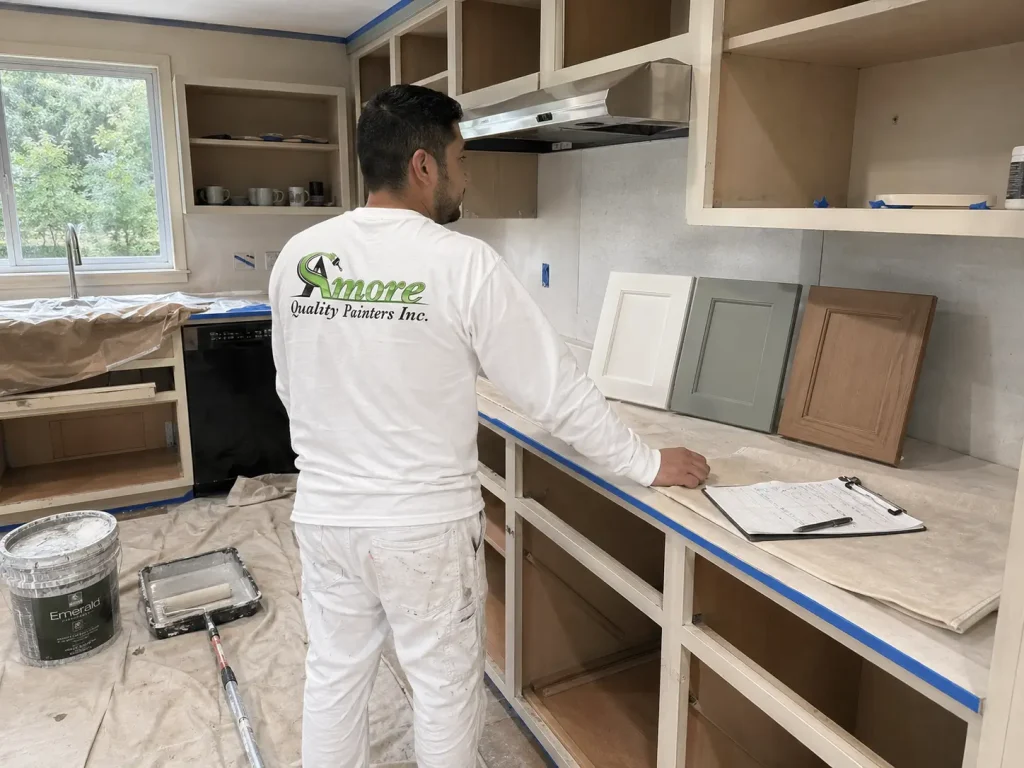
Paint your kitchen cabinets if the cabinets are solid, the layout works, and the finish is what bothers you.
Do not paint them if the structure is failing, the layout makes you crazy, or you’re hoping paint will hide problems that need actual repair.
Here’s the quick gut check:
| If this sounds like your kitchen | Best option |
|---|---|
| “I like the layout, but hate the color.” | Paint |
| “The wood is nice, but the finish is worn.” | Refinish |
| “The boxes are good, but the doors look dated.” | Reface |
| “The cabinets are damaged or the layout is bad.” | Replace |
| “I want a fresh look without a remodel.” | Paint or refinish |
| “I want a totally new kitchen.” | Replace |
If you’re stuck between painting and replacing, start by looking at the boxes. Not the doors. Not the color. The boxes.
Solid boxes give you options. Bad boxes make the decision for you.
If you’re still not sure where your cabinets land, we can help you sort it out before you spend money on the wrong fix. Our cabinet painting and refinishing team can look at the boxes, doors, finish, and wear, then give you a clear price for painting or refinishing if it makes sense.
FAQ
Should I paint my kitchen cabinets?
You should paint your kitchen cabinets if they are structurally sound, the layout works, and you mainly want a new color or cleaner finish. If the cabinets are damaged, warped, swollen, or poorly built, replacement is usually the better choice.
Is painting kitchen cabinets worth it?
Painting kitchen cabinets is worth it when the existing cabinets are in good shape. It can refresh the kitchen for less money and less disruption than replacement, but the finish depends heavily on prep, primer, paint quality, and application.
What is the cost to paint kitchen cabinets?
The cost to paint kitchen cabinets varies by kitchen size, door count, surface condition, and finish method. National sources commonly show professional cabinet painting from under $1,500 for simpler projects to several thousand dollars for larger or more detailed kitchens.
What is better, cabinet painting vs refacing?
Cabinet painting is better if you like your current cabinet door style and only want to change the color. Refacing is better if the cabinet boxes are solid but you want new doors, new drawer fronts, and a bigger style change.
What are the kitchen cabinet refacing pros and cons?
The main pros of cabinet refacing are a bigger style update, new doors, and less disruption than full replacement. The main cons are higher cost than painting, no layout change, and no fix for weak cabinet boxes.
What is the difference between cabinet refinishing vs painting?
Cabinet refinishing usually restores or changes a stained wood finish while keeping the wood look. Cabinet painting covers the surface with a solid color. Refinishing is best for attractive real wood. Painting is best when you want a brighter or more modern color.
How long does cabinet paint last?
Cabinet paint can last for years when the cabinets are cleaned, sanded, primed, painted properly, and allowed to cure. Daily use, cleaning habits, cabinet material, and prep quality all affect how long the finish holds up.
When should I replace kitchen cabinets?
Replace kitchen cabinets when the boxes are damaged, the layout does not work, storage is poor, or the cabinets are made from failing materials. Painting changes the surface, but it will not fix bad structure.
Final thoughts
So, should I paint my kitchen cabinets?
If the cabinets are solid and the layout works, yes, painting can be a smart way to make the kitchen feel updated without going into full remodel mode. It is especially worth considering if the main thing bothering you is color, yellowed finish, old stain, or a style that feels heavier than the rest of your home.
If the boxes are damaged or the layout is wrong, don’t let paint talk you into keeping cabinets you already know are not working.
A good cabinet project starts with an honest look at what you have. From there, the choice gets easier: paint, refinish, reface, or replace. If painting or refinishing looks like the right fit, our cabinet painting and refinishing team can help you figure out what your cabinets need before you commit to a bigger kitchen project.